In the 1970s, stainless steel was the mainstream material for watches. The 'black' exterior made from this 'special light alloy' made a sensational debut in the market. CITIZEN’s proactive approach to adopting such new materials ahead of other companies exemplifies the brand’s manufacturing philosophy that continues to this day.
Looking at this model from the perspective of 'how to beautifully express this new material,' it is extremely well executed. The modern form, created without a bezel and shaped by a conical design, stands out. The side surfaces of the case are not vertical but are slanted inward, and this sloped design creates ridges with the conical surface, giving the case expressive character lines that are never inorganic, whether viewed from the front or the side. The ridgeline on the back slope of the case is set higher, which helps the case appear thinner and ensures that the various ridges are well balanced.
With the main components—case, band, and dial—all rendered in 'black,' the silver color of the polished ring part on the inner bezel serves as an excellent accent, tightening the overall look. The vivid 'orange' applied to the indexes and hands adds a fresh color expression, and together with the modern expression of the new case material, it gives this model a strong impression.
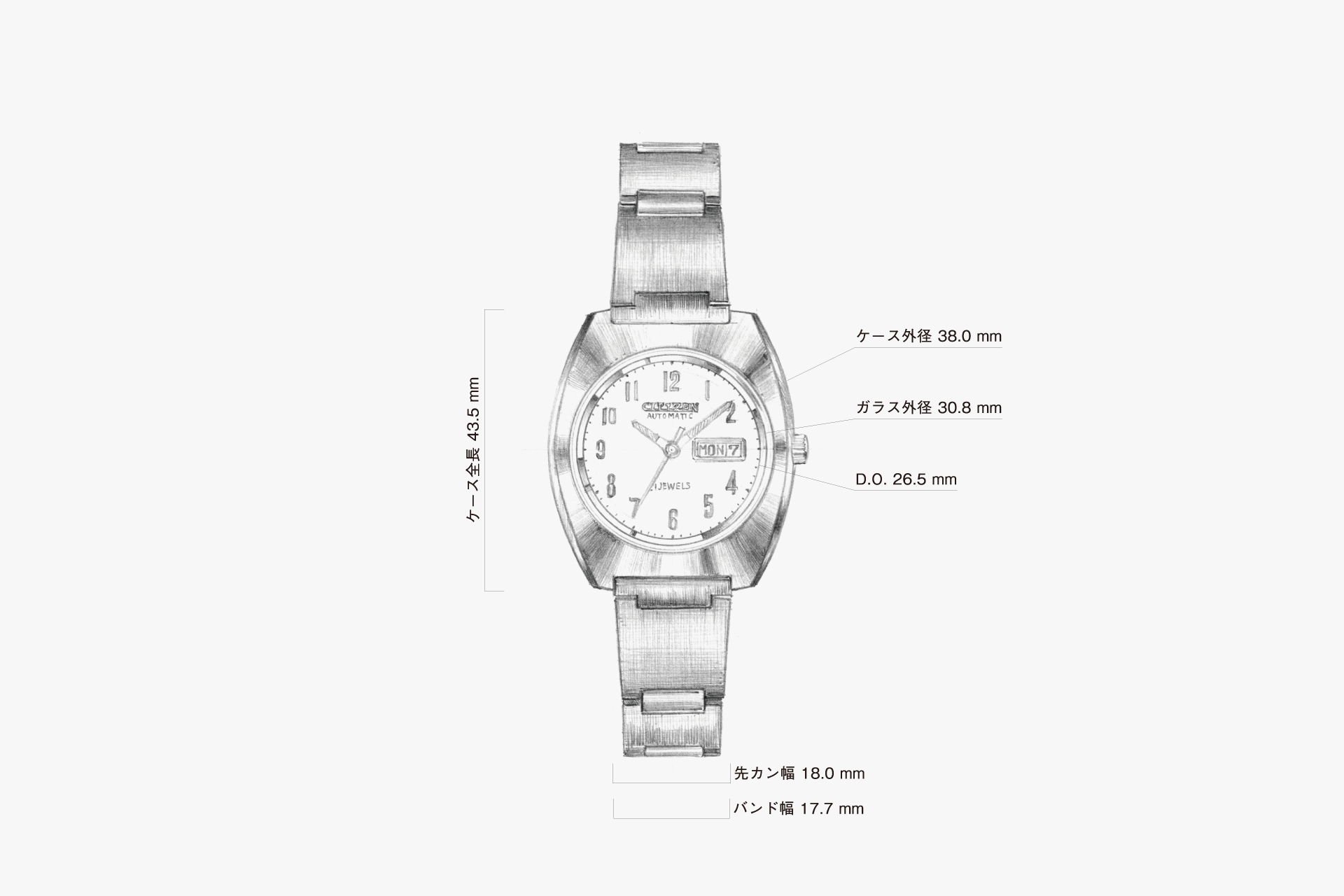
The design of the upper surface is composed of simple lines. The bezel-less design, with the case top formed by a conical surface and the black exterior, creates a powerful and modern impression.
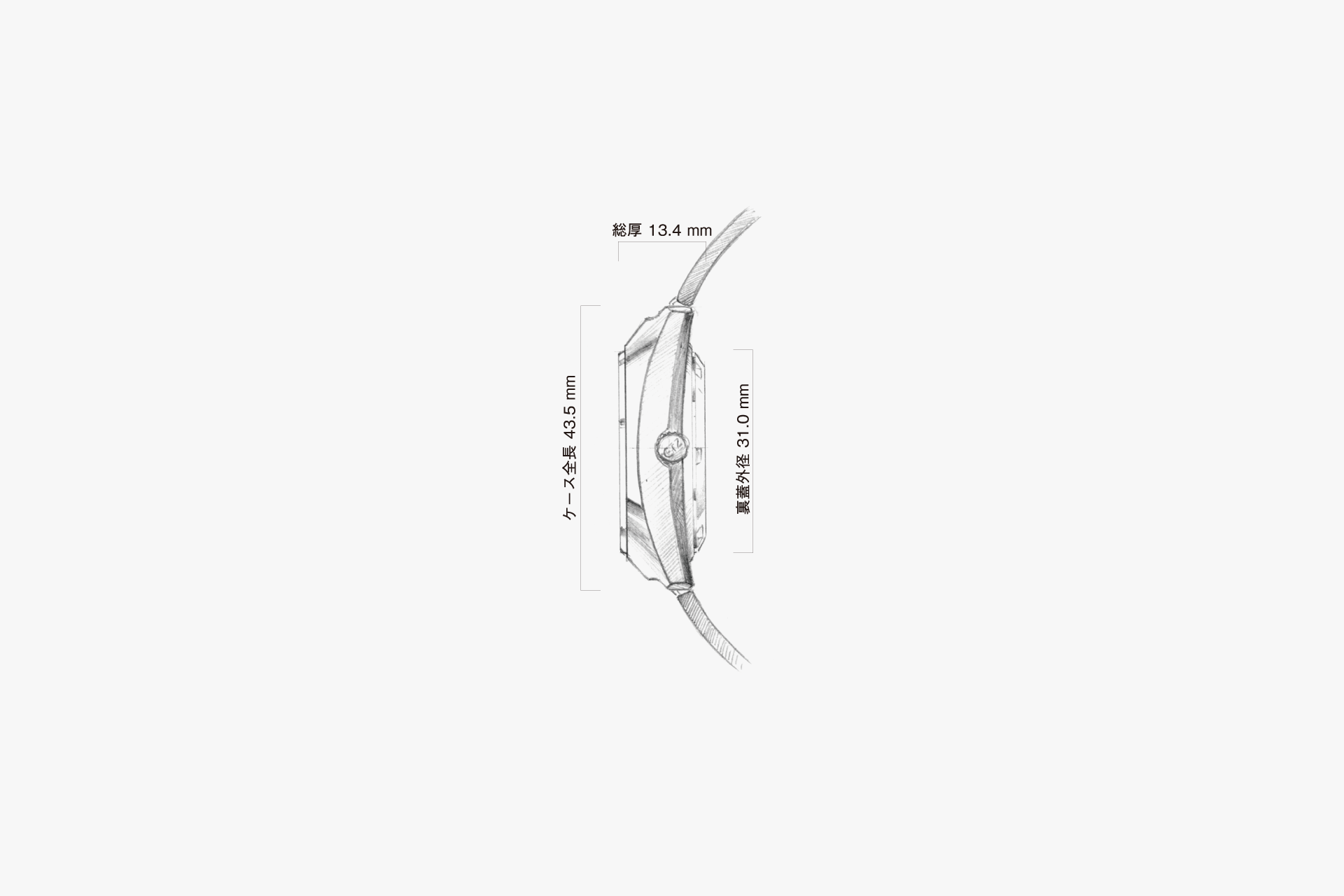
The positions of the various ridges are carefully considered to make the case appear thinner. The watch has a strong sense of solidity.
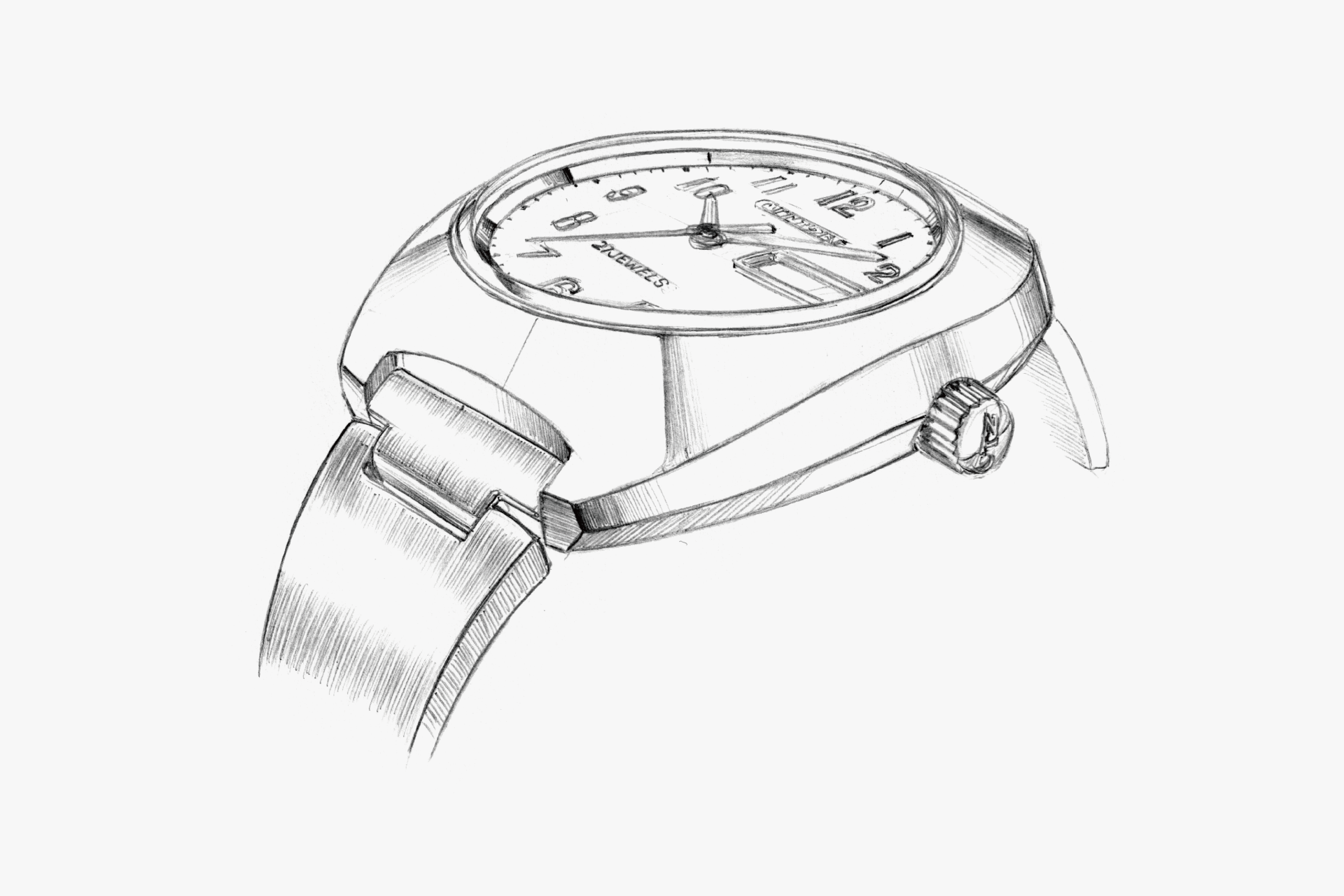
By placing a metal ring with a different texture between the dial and the glass, the visual distance from the dial to the glass appears thinner. The 'ridge lines' formed by the conical top surface of the case and the sloped sides create expressive and subtle lines.
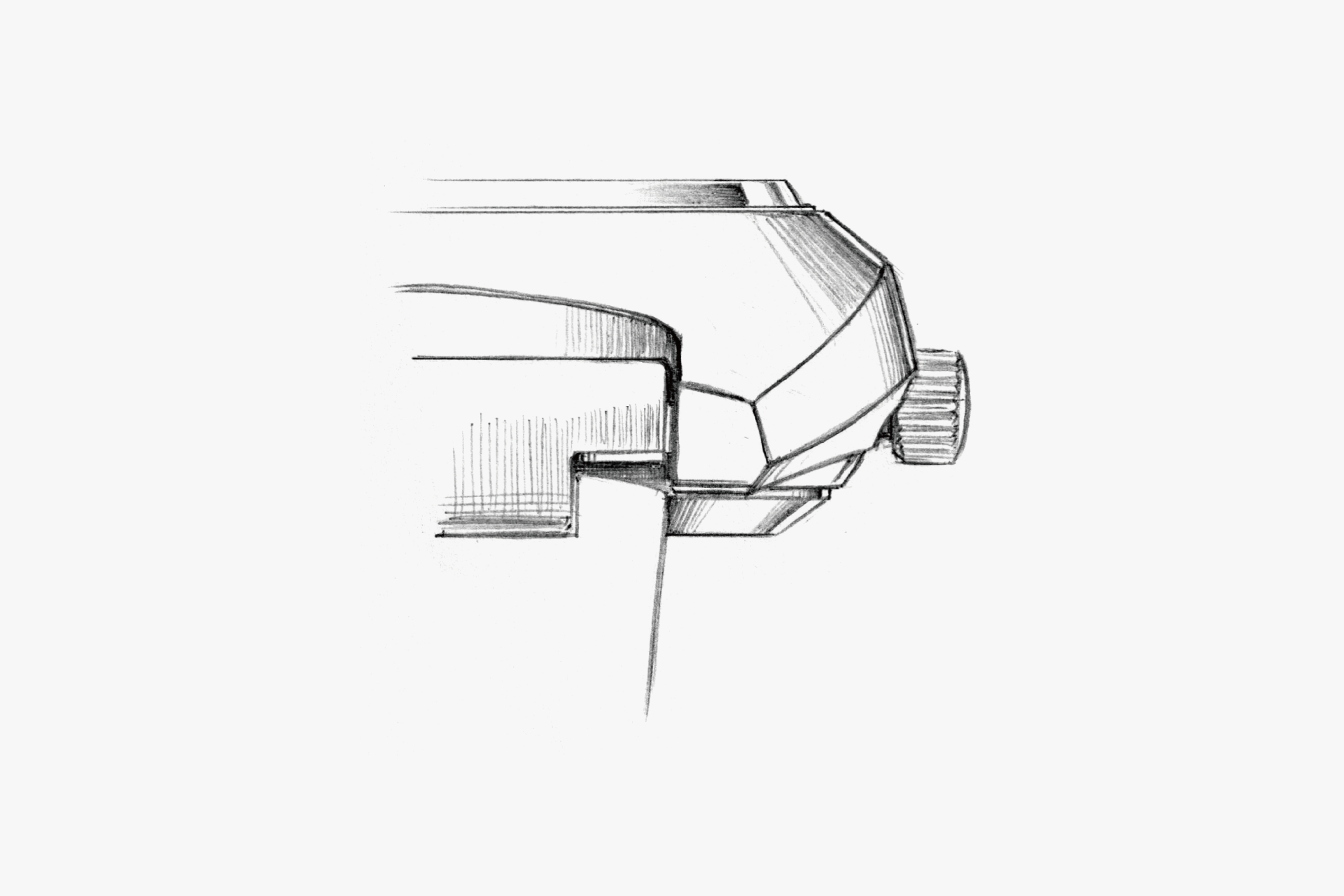
The upper surface of the glass protrudes significantly above the case. The side of the case is not a 'vertical surface' but a 'sloped surface,' forming a good design line. The positions of the various ridges are also carefully considered to make the case appear thinner.
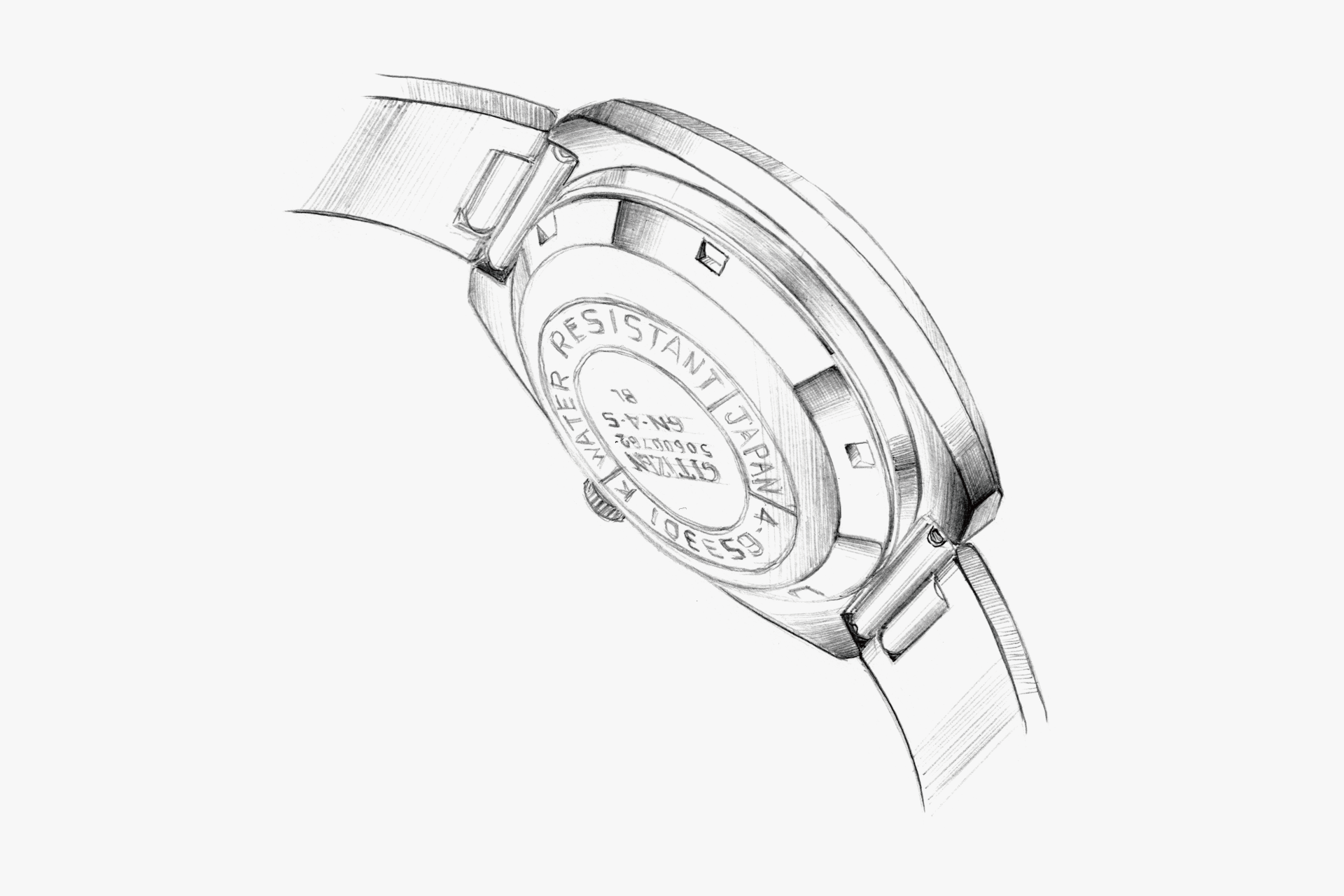
The back of the case is designed in a shape that allows for machining, with design treatments applied. The lower slope of the case is also made wider to make the case appear thinner.
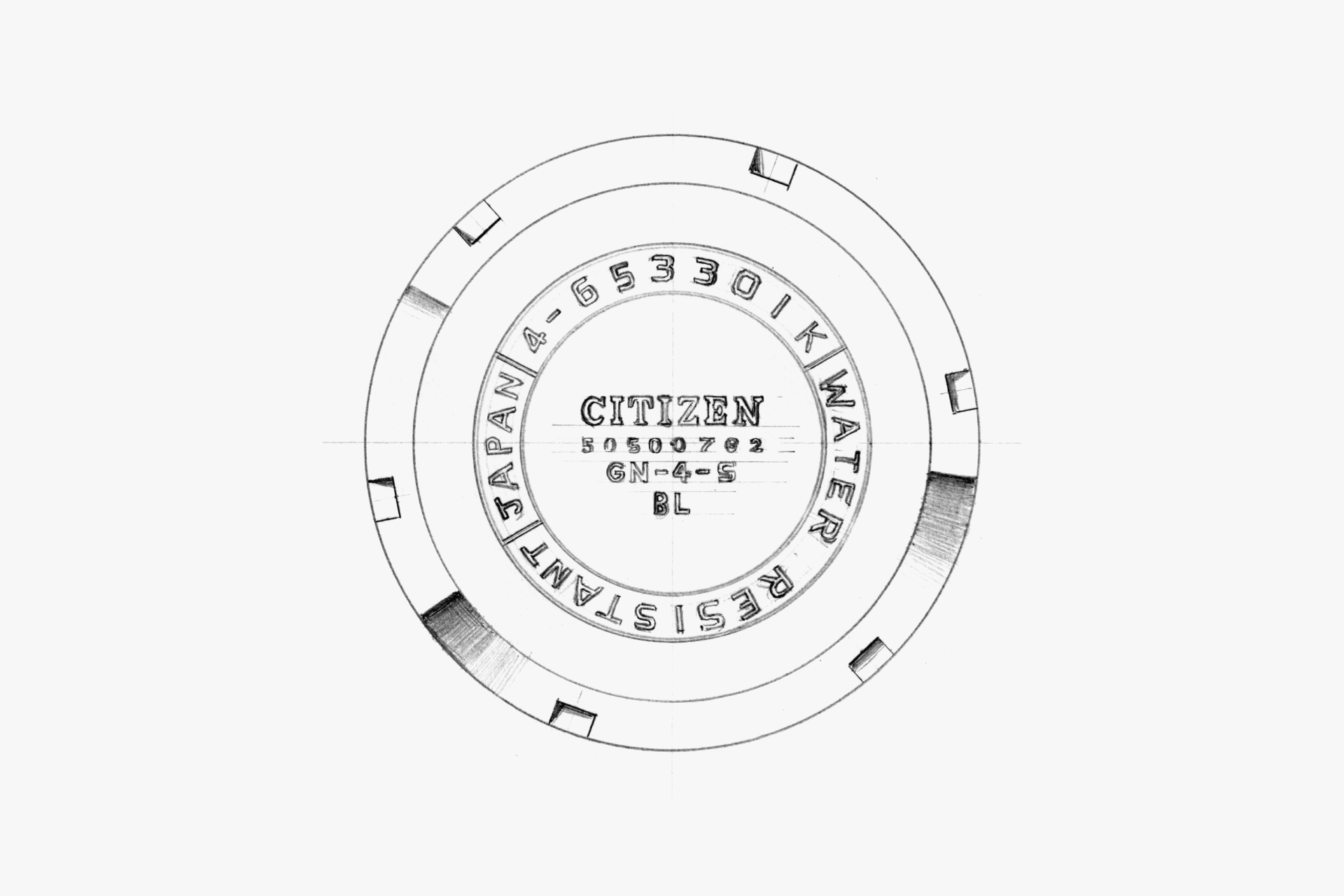
The case back is entirely polished. The text and other markings are engraved by pressing.
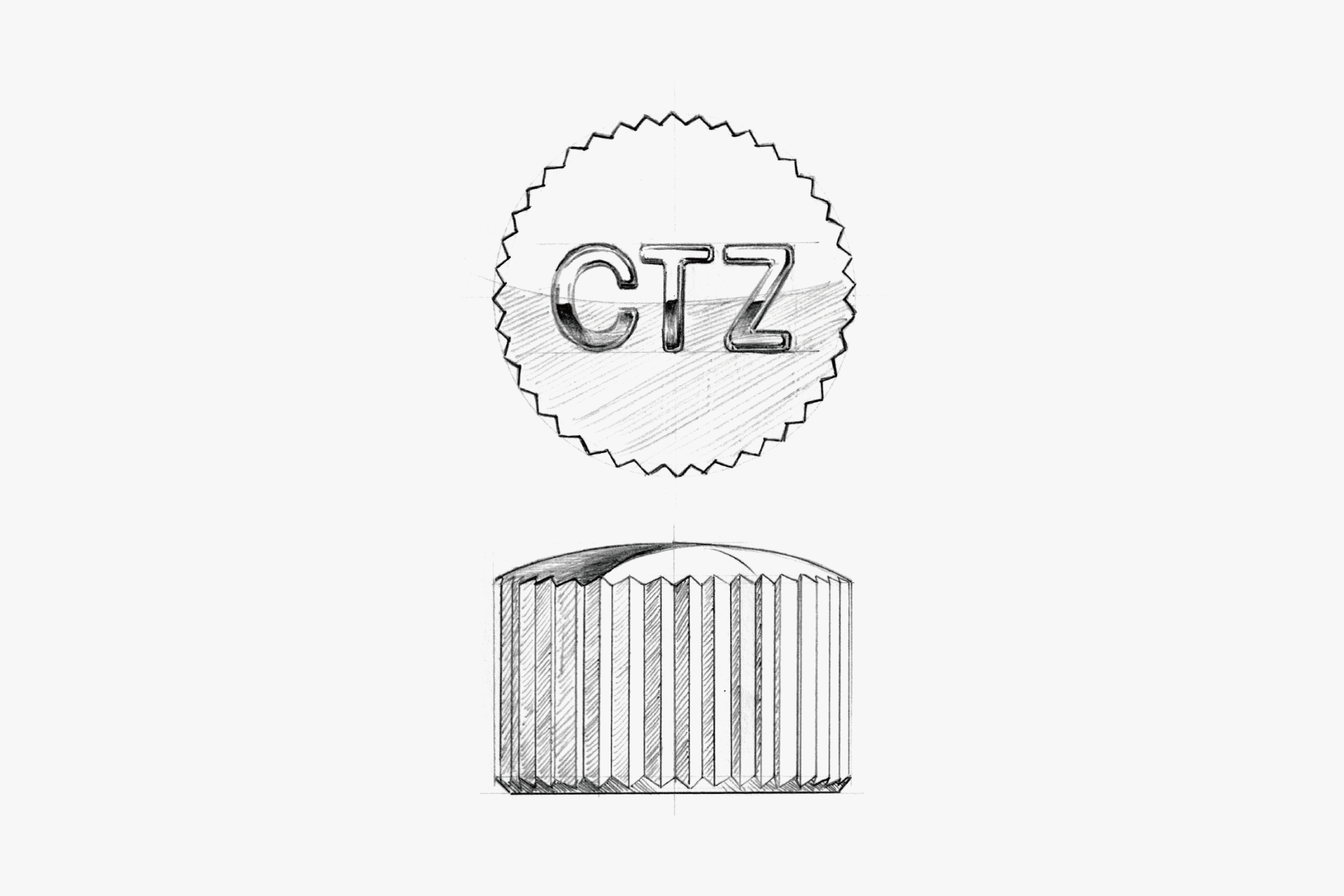
The letters 'CTZ,' representing 'CITIZEN,' are expressed as protruding, polished characters.
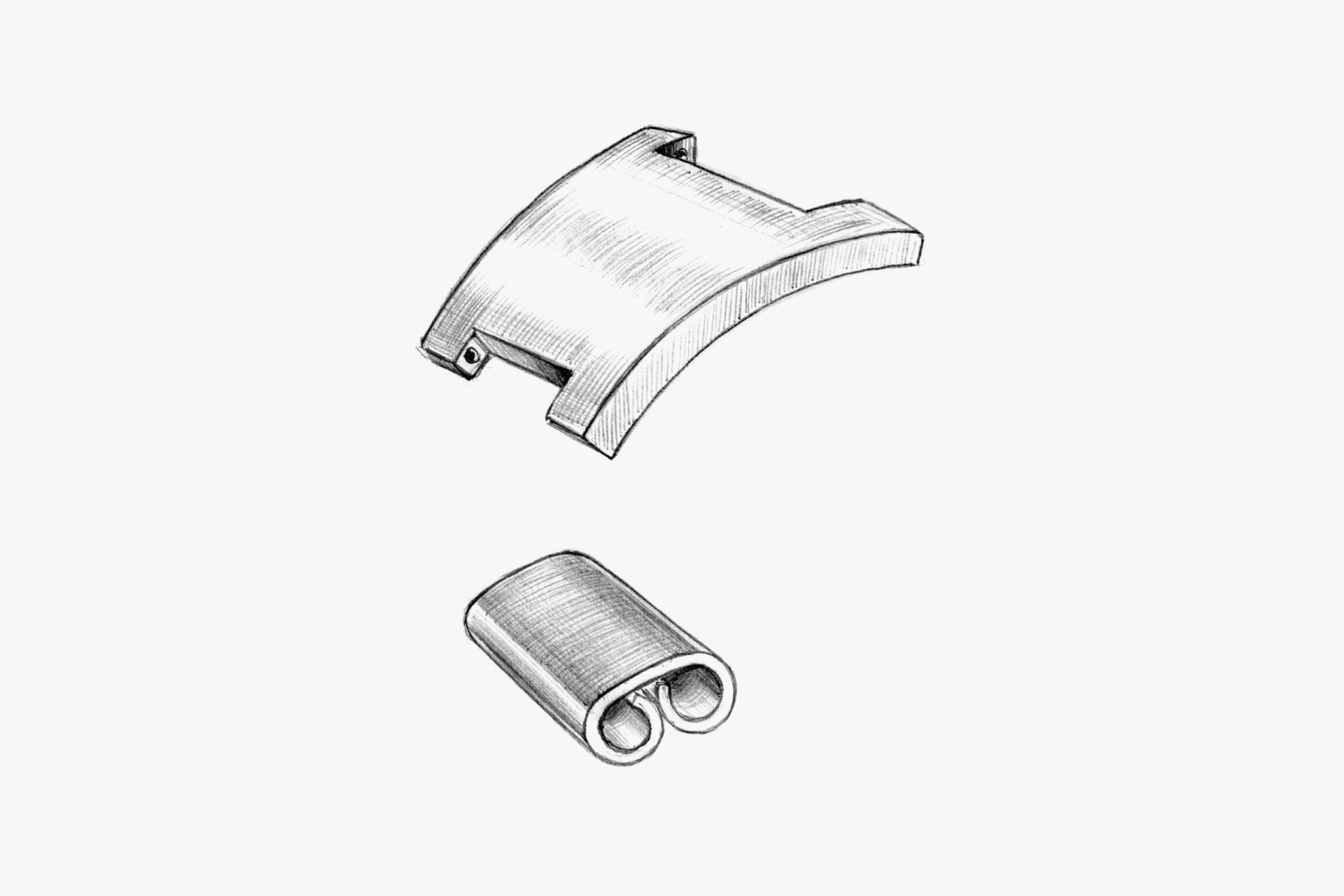
The main part of the band appears to be punched out of material and then bent and processed.
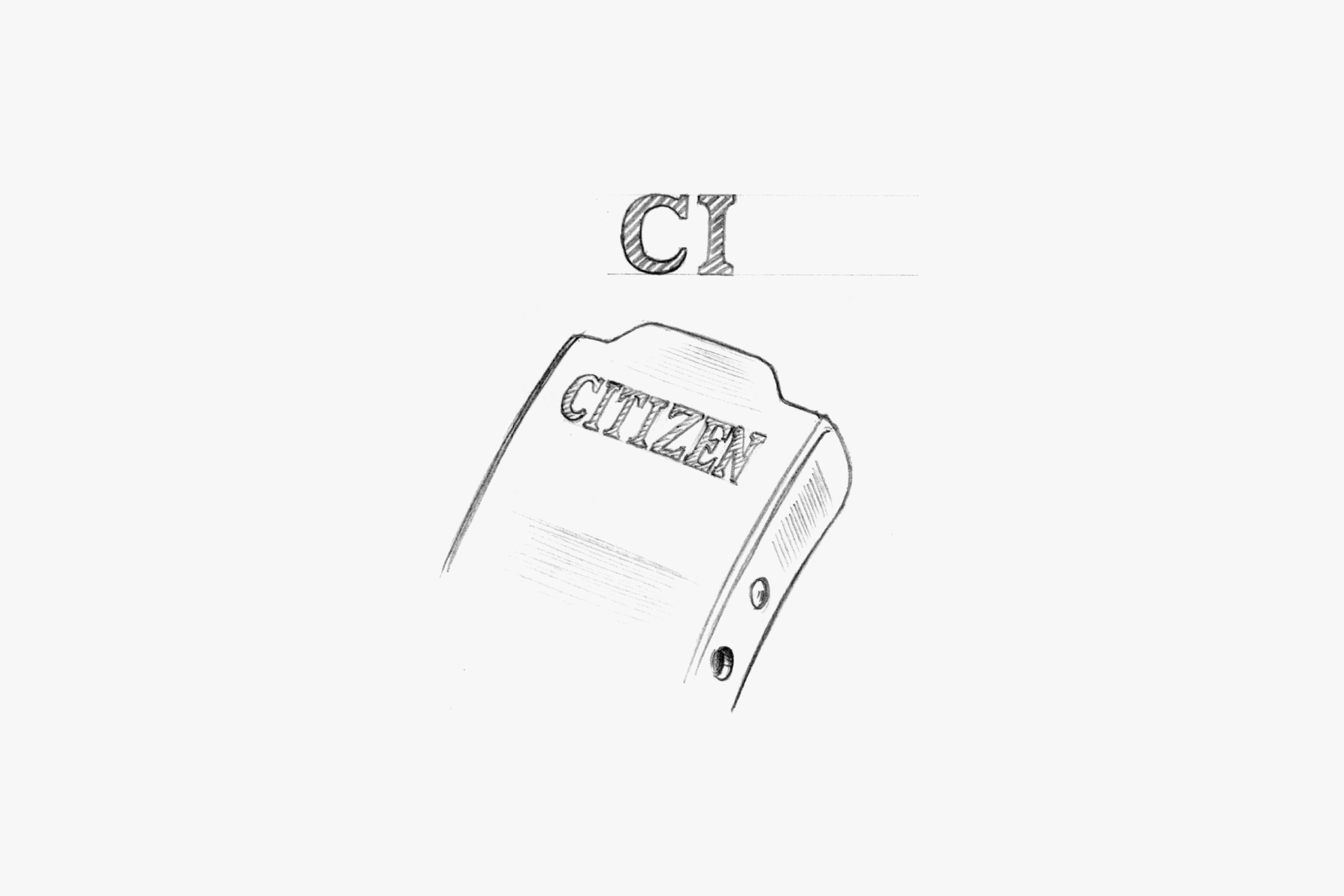
If you look closely at the 'CITIZEN' logo engraved on the clasp cover, you can see that the inside of the letters is sloped.
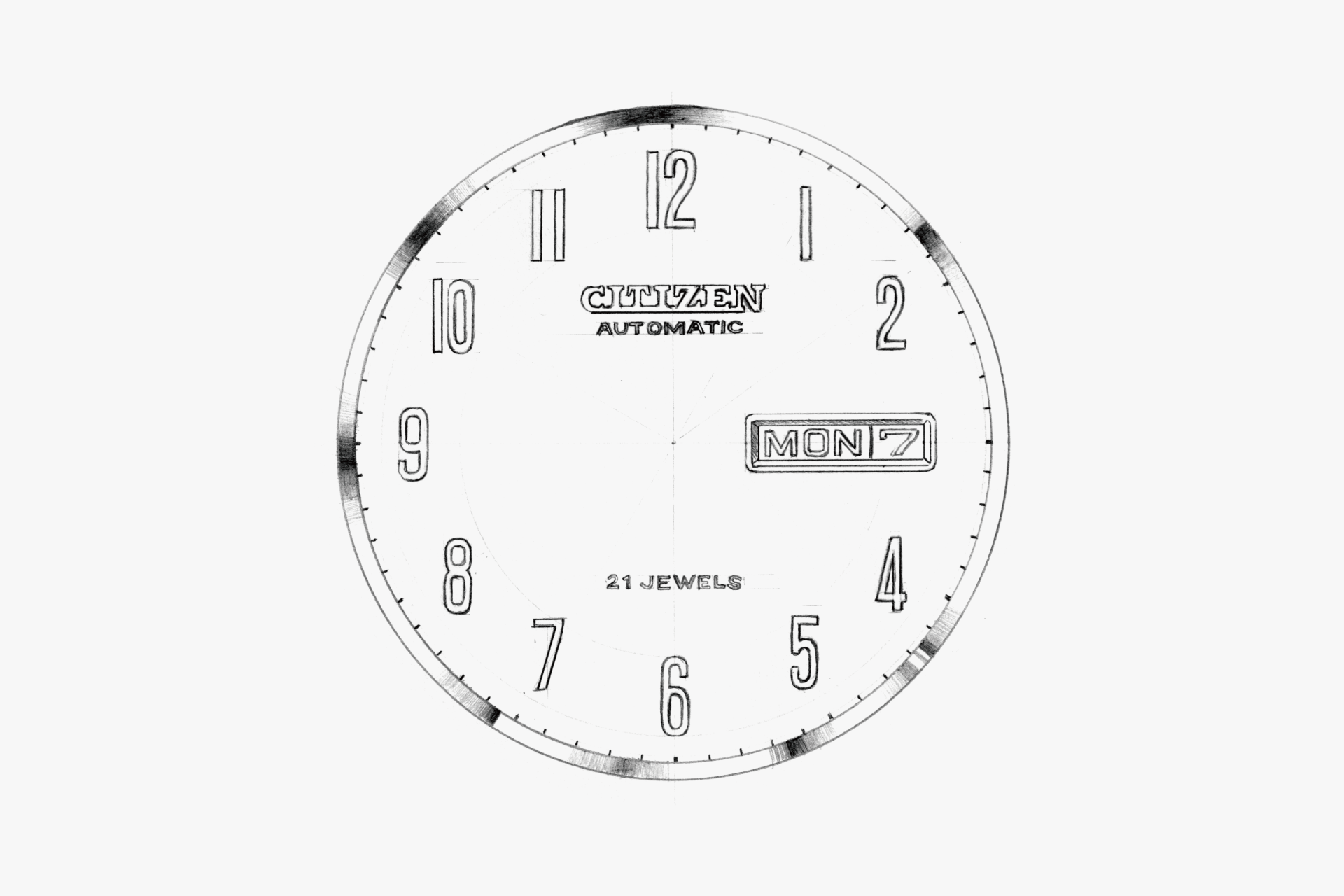
The polished metal ring placed on the outer edge of the dial creates a striking impression. The Arabic numerals are printed in highly saturated orange, resulting in a bold and contrasting expression.
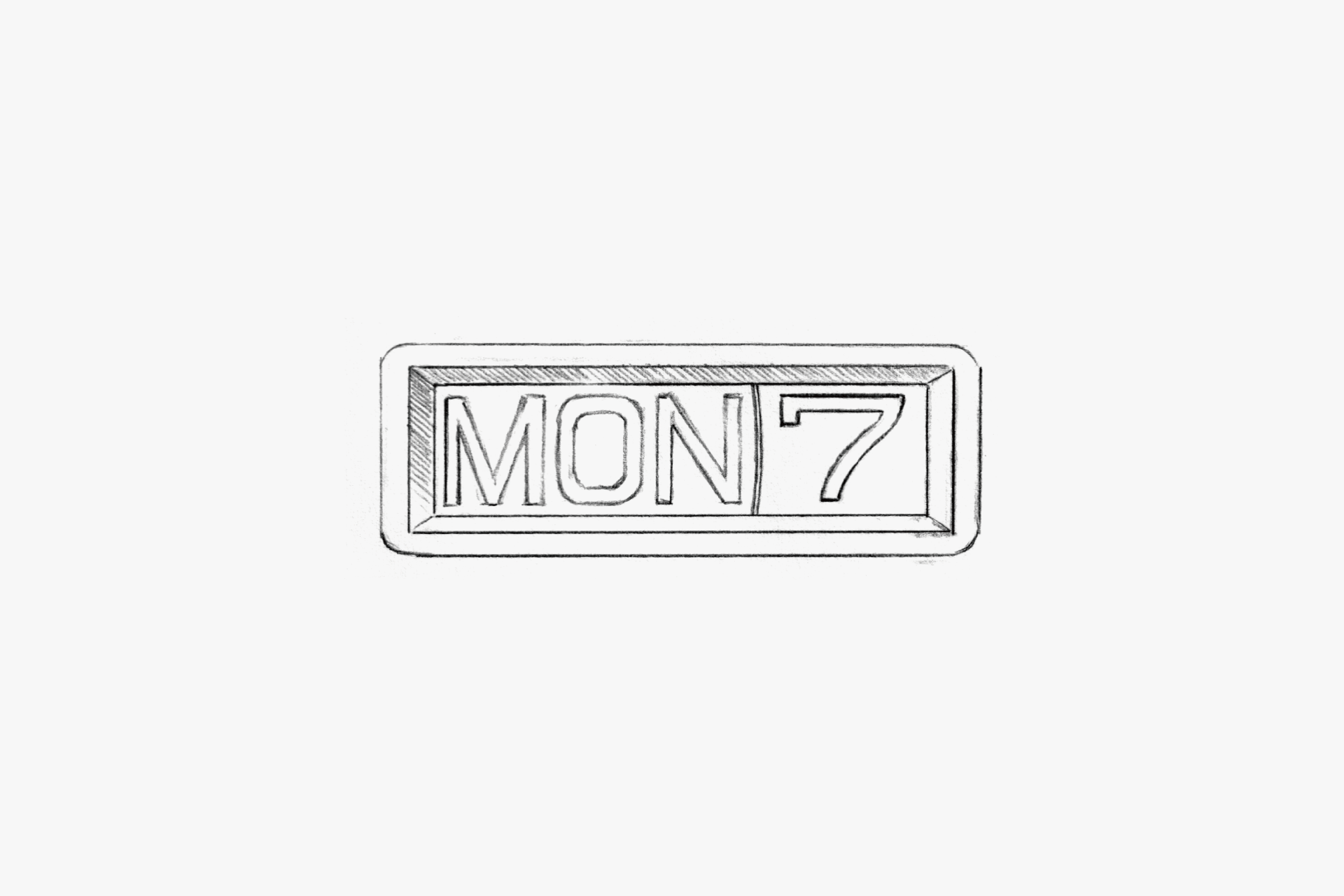
The inner sloped surface of the window at the 3 o'clock position is designed to be slightly wider in the 3 to 9 o'clock direction compared to the 12 to 6 o'clock direction. This is likely to improve the visibility of the day and date discs.
ENGINEER'S EYE
Cool
The 1970s was a period of diversification in CITIZEN design—a time of counterculture. It was an era when distinctive designs flourished: integrated bracelet cases, TV-shaped cases, UFO-shaped cases dubbed the medal type, and case designs without lugs. Often overlooked, this Cal. 6501 is in fact one of the notable movements that supported this trend.
One of the development goals was to create a “good-looking rectangular waterproof watch.” To increase design freedom, the movement’s outside diameter was made significantly more compact than previous models, set at φ23.3 mm. To that end, several measures were adopted: a large 6-beat balance wheel placed boldly near the outer edge of the movement, a two-tier structure for the clutch wheel (reverser wheel), and a compactly packaged automatic winding mechanism. The rugged character of each component is also part of its appeal, stemming from a design approach premised on automated assembly, which was nearing maturity at the time.
Every time I see a “good-looking” CITIZEN from the 1970s, I can’t help but think of the movement designers and production engineers who racked their brains to meet market expectations.