SOUNDWITCH is a digital clock that can also play the radio. By making the main unit and the battery box for the radio detachable, you can use it as a clock while also enjoying the radio when you wish. This versatility is one of its main attractions.
The clock body is made of plastic and, while the overall structure is linear, the careful rounding of the corners in the details prevents it from feeling cheap.
Additionally, there are thoughtful touches for operability, and even as it incorporates new technology, the know-how from wristwatch design is evident in its user-friendly features.
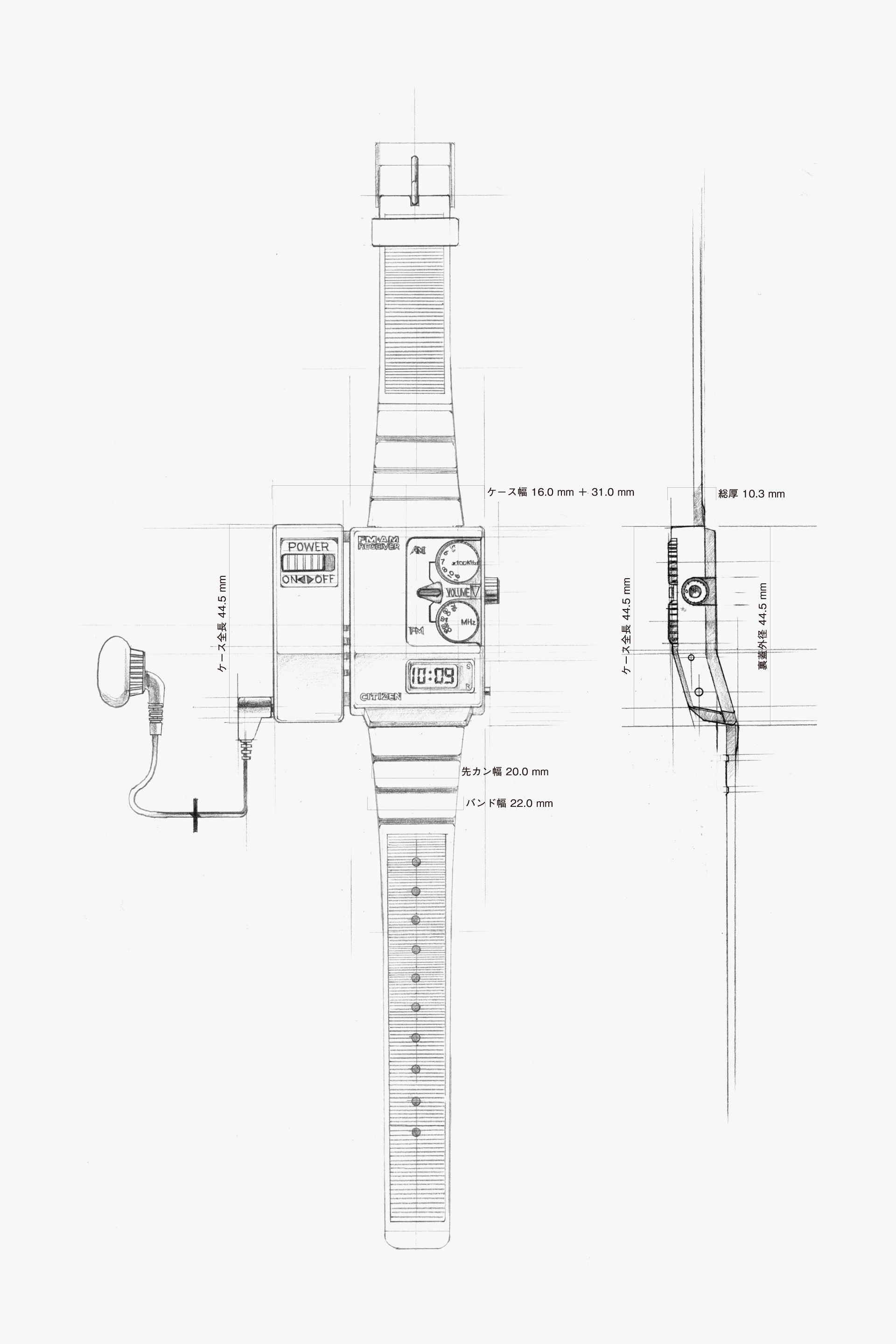
The overall design has a linear impression. The subtle rounding of the details expresses a sense of quality throughout. Seen from the side, the 20-degree tilt makes the digital time display easy to read, showing consideration for the user when worn.
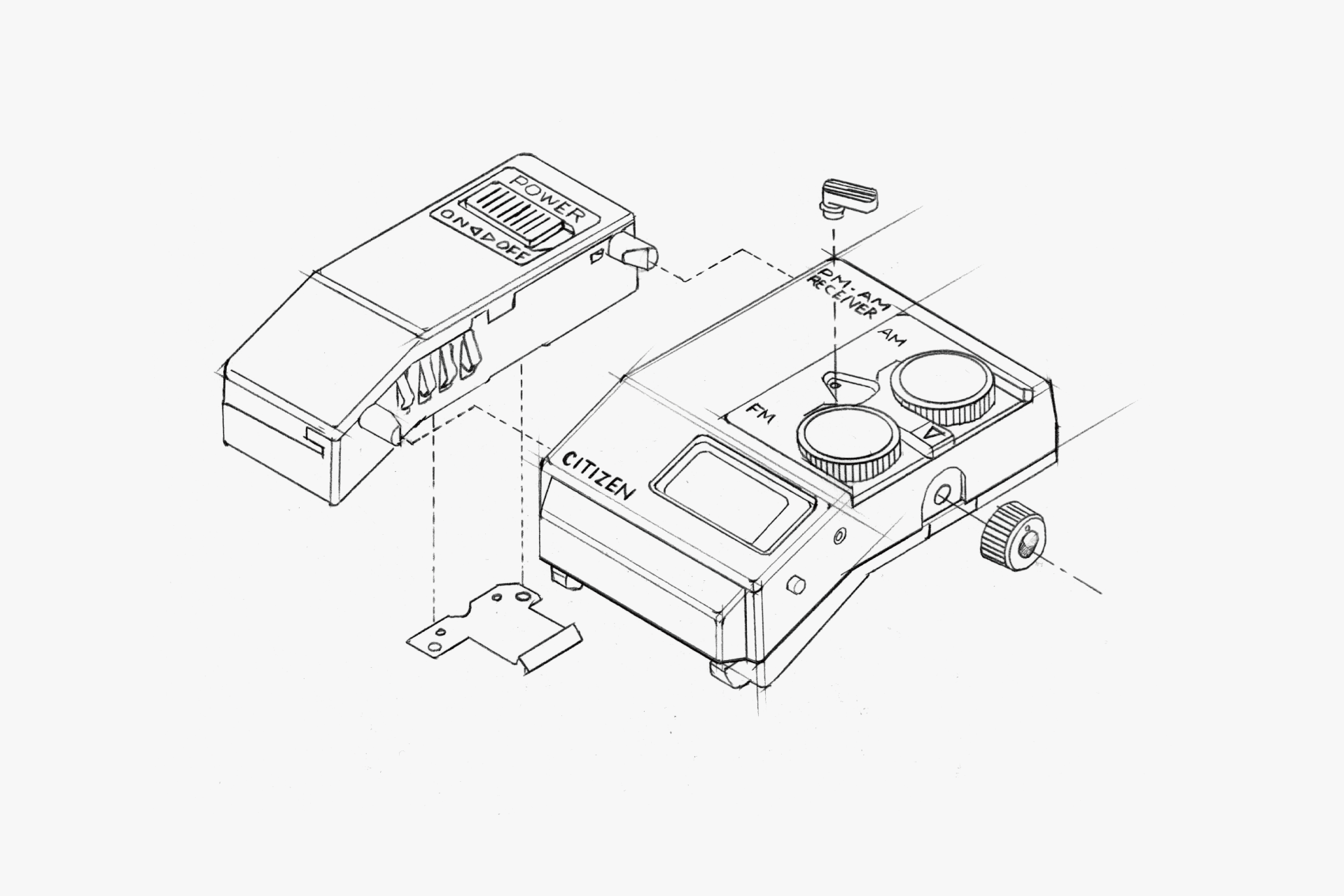
Exploded view. The detachable battery box (left in the diagram) can hold three button batteries, allowing for long hours of radio enjoyment. You can also remove it and use only the clock unit (right in the diagram) as a clock.
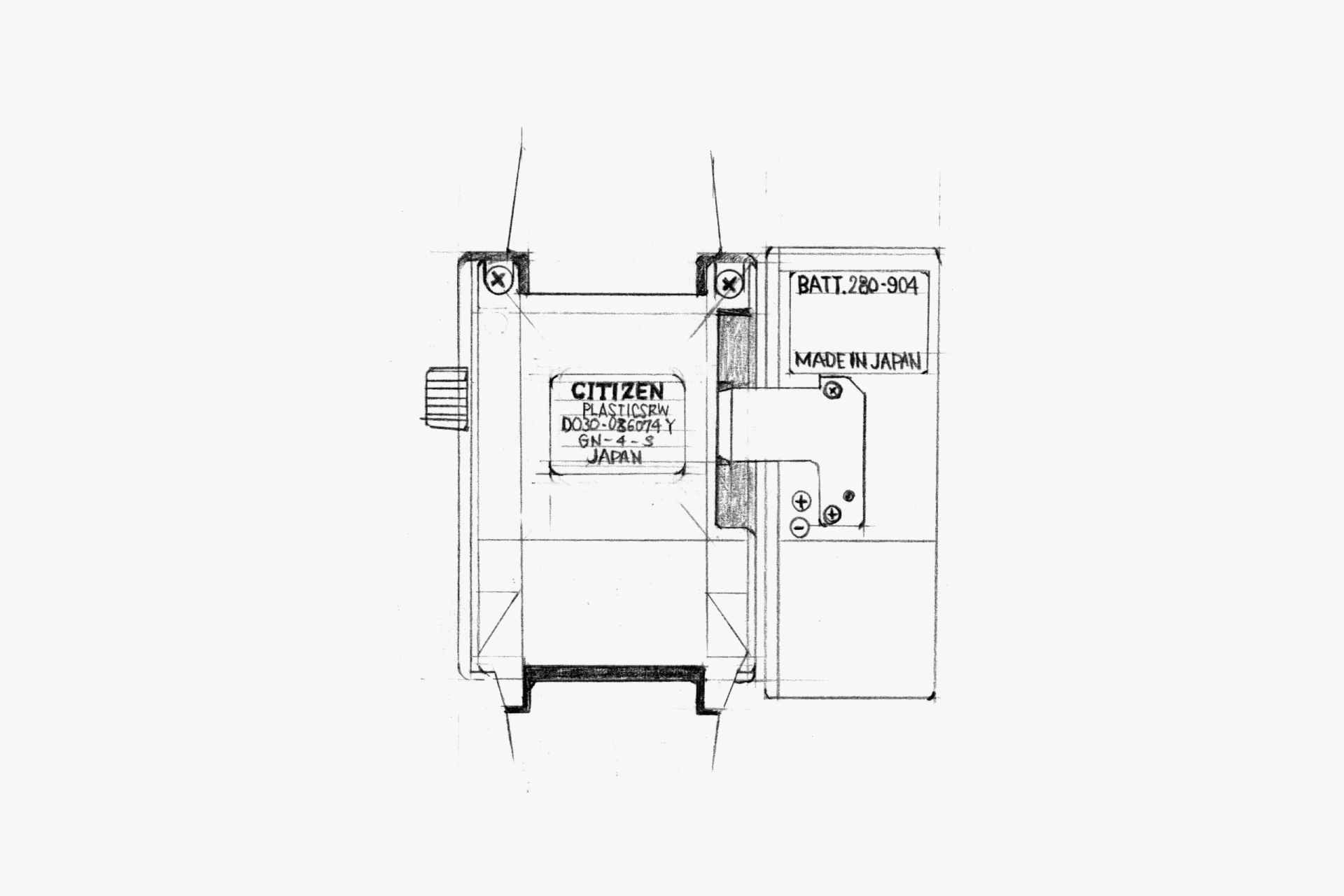
Back of the clock. Along with the engraving, the back also features a linear case design, showing attention to detail.
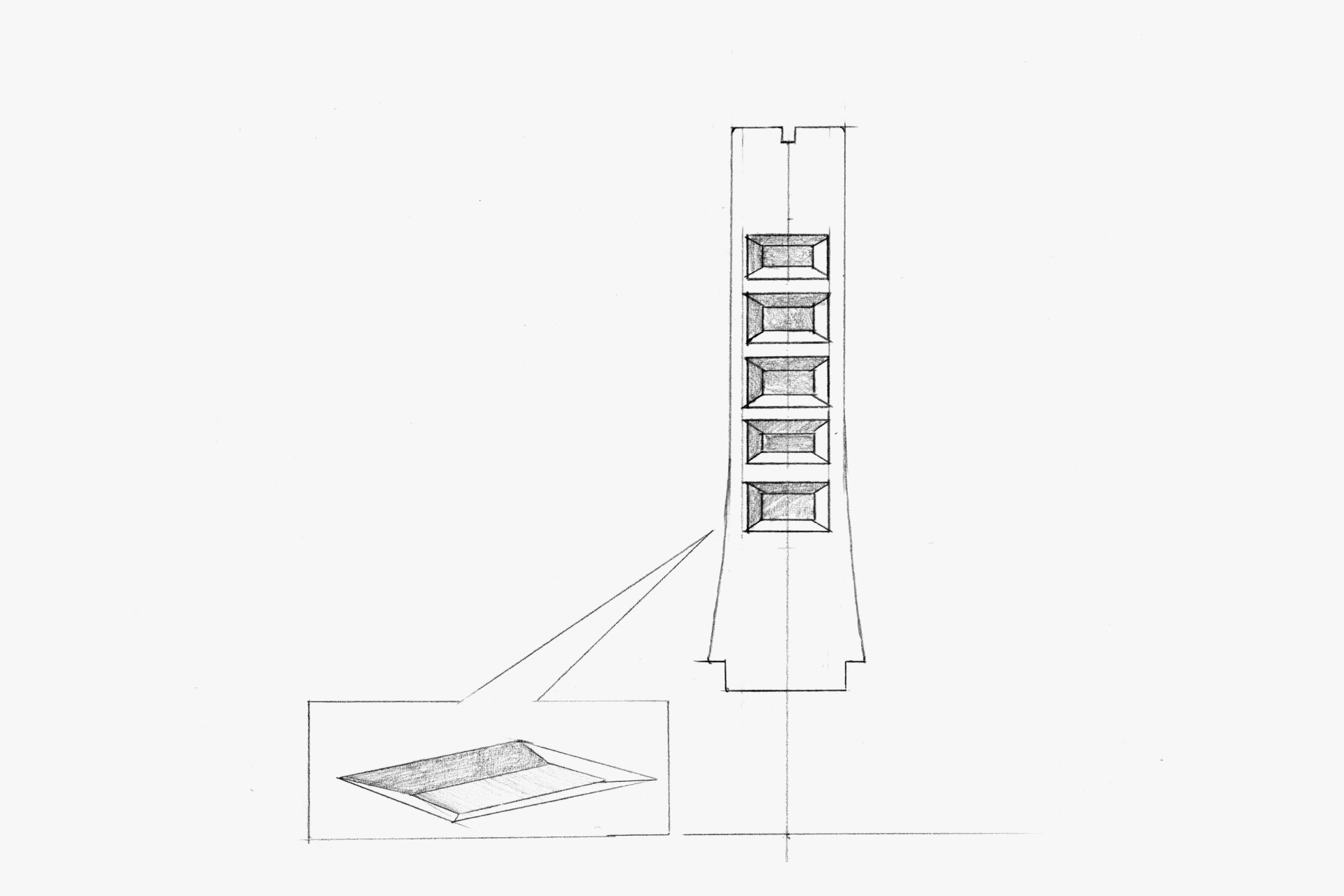
Back of the band. Although there are recesses and protrusions for sweat release, the design emphasizes aesthetics over function, and the sweat-release shapes are also expressed in a linear style.
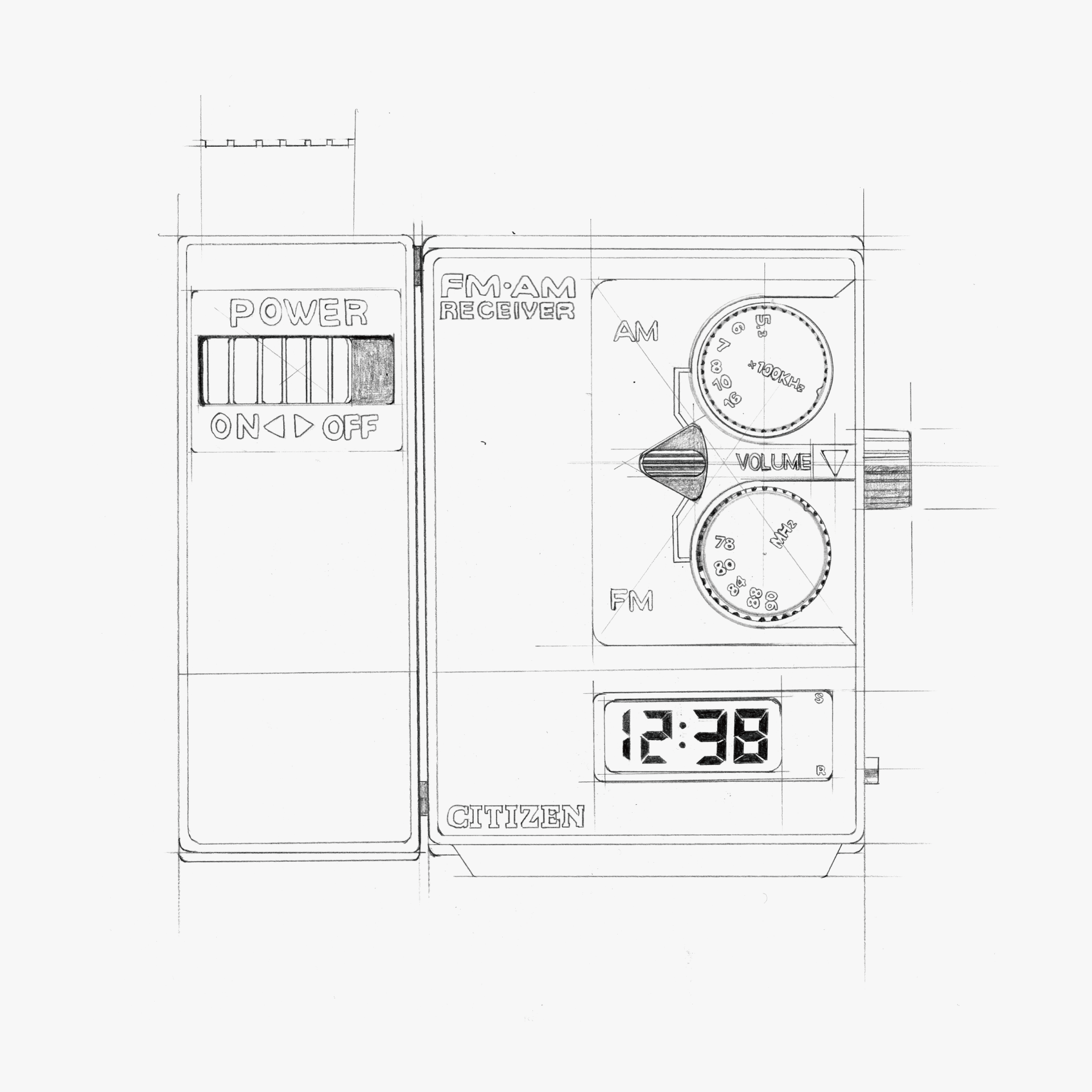
By adding subtle curves within the linear shape, the design makes good use of the characteristics of resin as a material. Since resin is less suited to sharp edges compared to metal, the corner design is carefully controlled with this in mind.
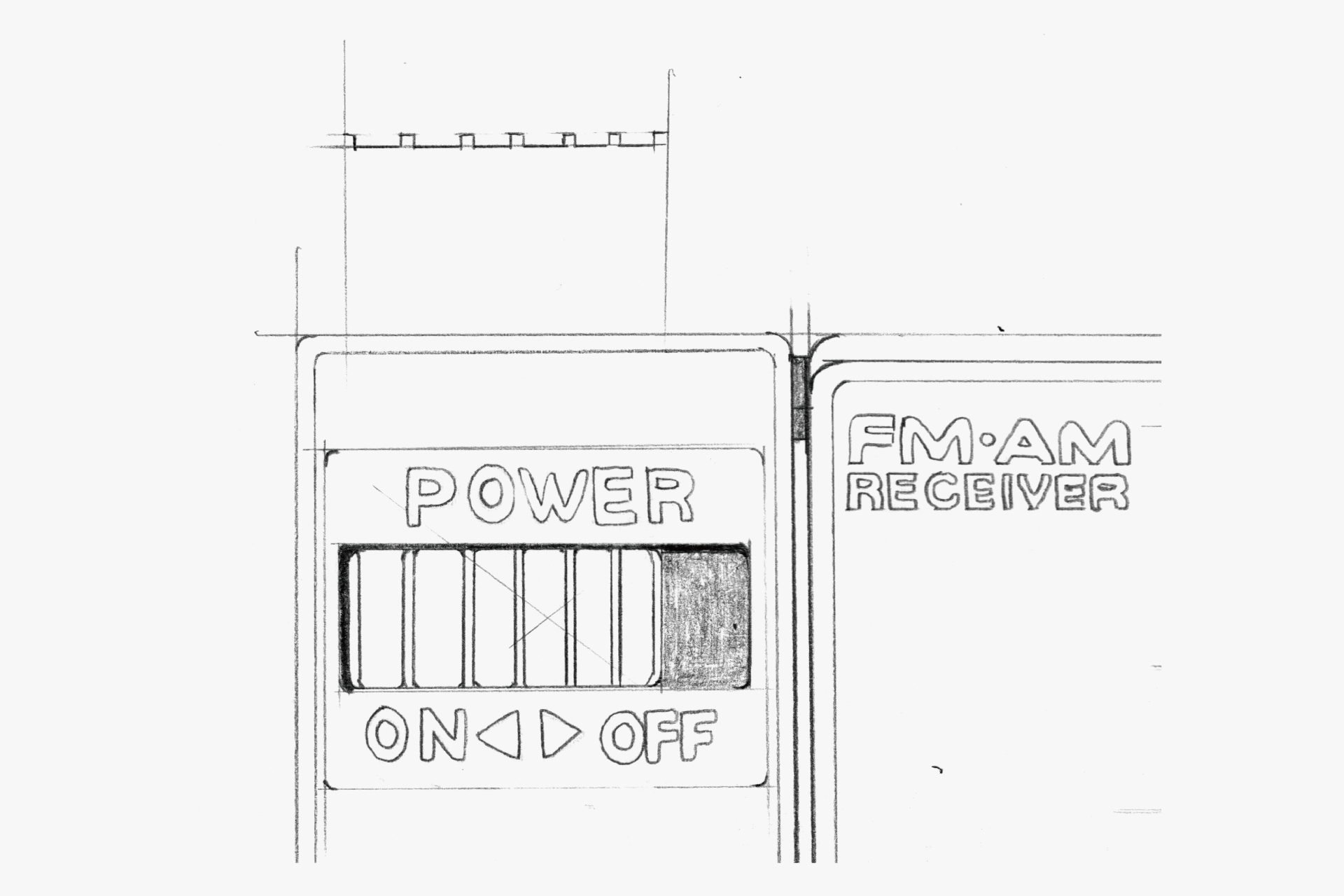
Fine recesses and protrusions are added to the switch details to make ON/OFF switching easier.
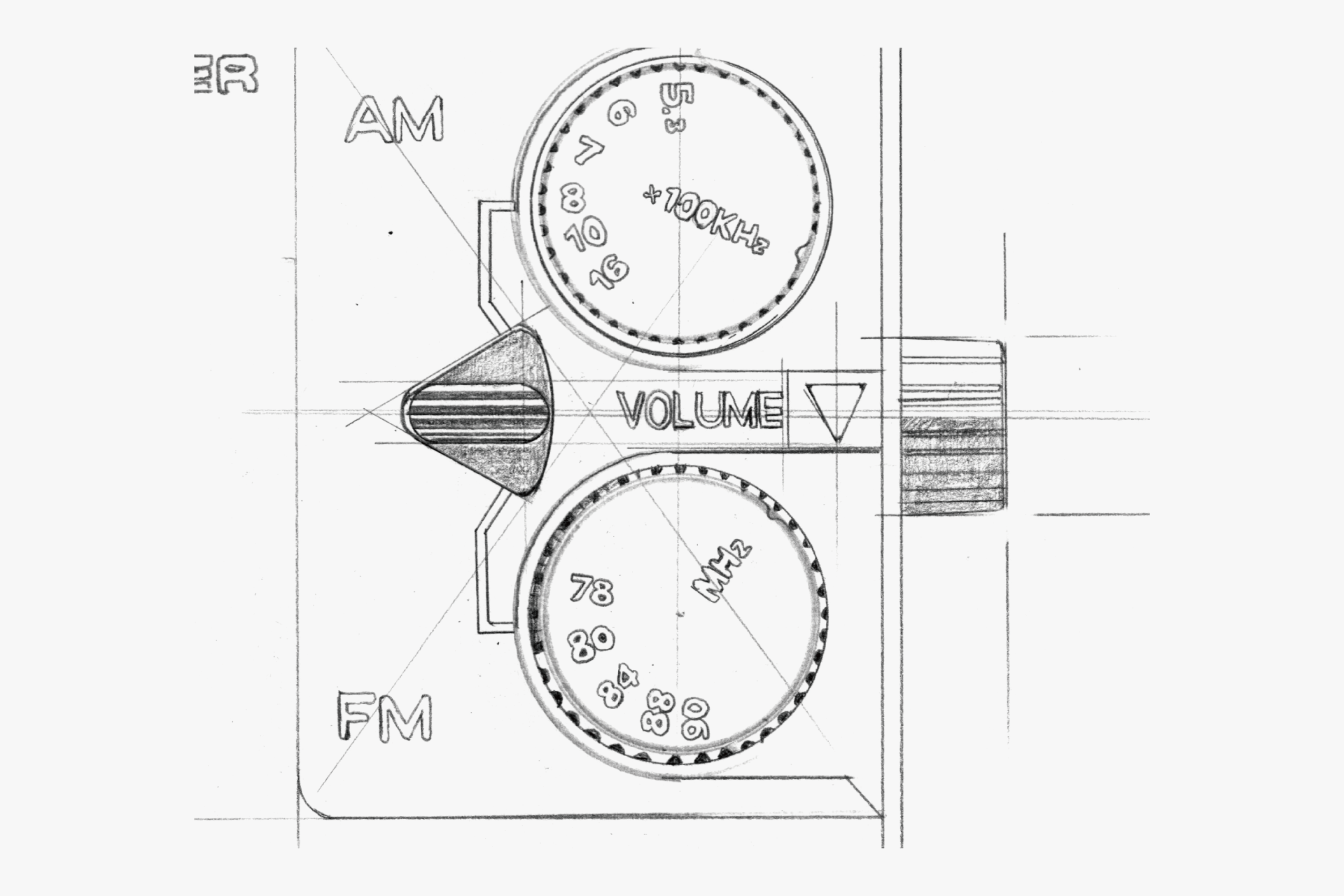
User interface design for frequency adjustment. The shapes for AM/FM switching, frequency selection, and volume adjustment are all designed with the attention to usability and consideration typical of a wristwatch designer.
ENGINEER'S EYE
Wearing Music
This is the “Sound-Witch,” a coined name from sound + watch: a wristwatch equipped with an AM/FM radio function. At the time, wireless technology was not yet commonplace, so there was the hurdle of using wired earphones. Even so, it was an ambitious model that quickly recognized and realized the demand to enjoy music lightly, anytime.
AM reception uses a straight (TRF) method covering 535–1605 kHz, and FM reception uses a superheterodyne method covering 76–90 MHz, which together encompass nearly all of the main frequencies still in use today. The radio section uses three button batteries, enabling about 55 hours of AM and about 10 hours of FM reception. The power box for the radio is detachable, so removing it when you are not using the radio makes the unit more compact.
The digital time display can be switched between seconds display and a calendar that requires no end‑of‑month correction. Even with the radio module removed, it adds a touch of style as a digital watch with a near‑futuristic design.