The shape, composed of spherical and curved surfaces, gently captivates many people. Its round and unconditionally cute form, along with its simple and familiar shape, inspires affection and makes you want to keep it close at all times. You can sense the careful handcrafting in every detail.
The slight differences in the height and position of the end pieces add individuality. Its delicacy, which seems as if it could break if handled roughly, conversely makes you want to treat it with care and attention.
Upon closer inspection, the shapes that evoke a feeling of 'cuteness' are also one of the elements that foster attachment.
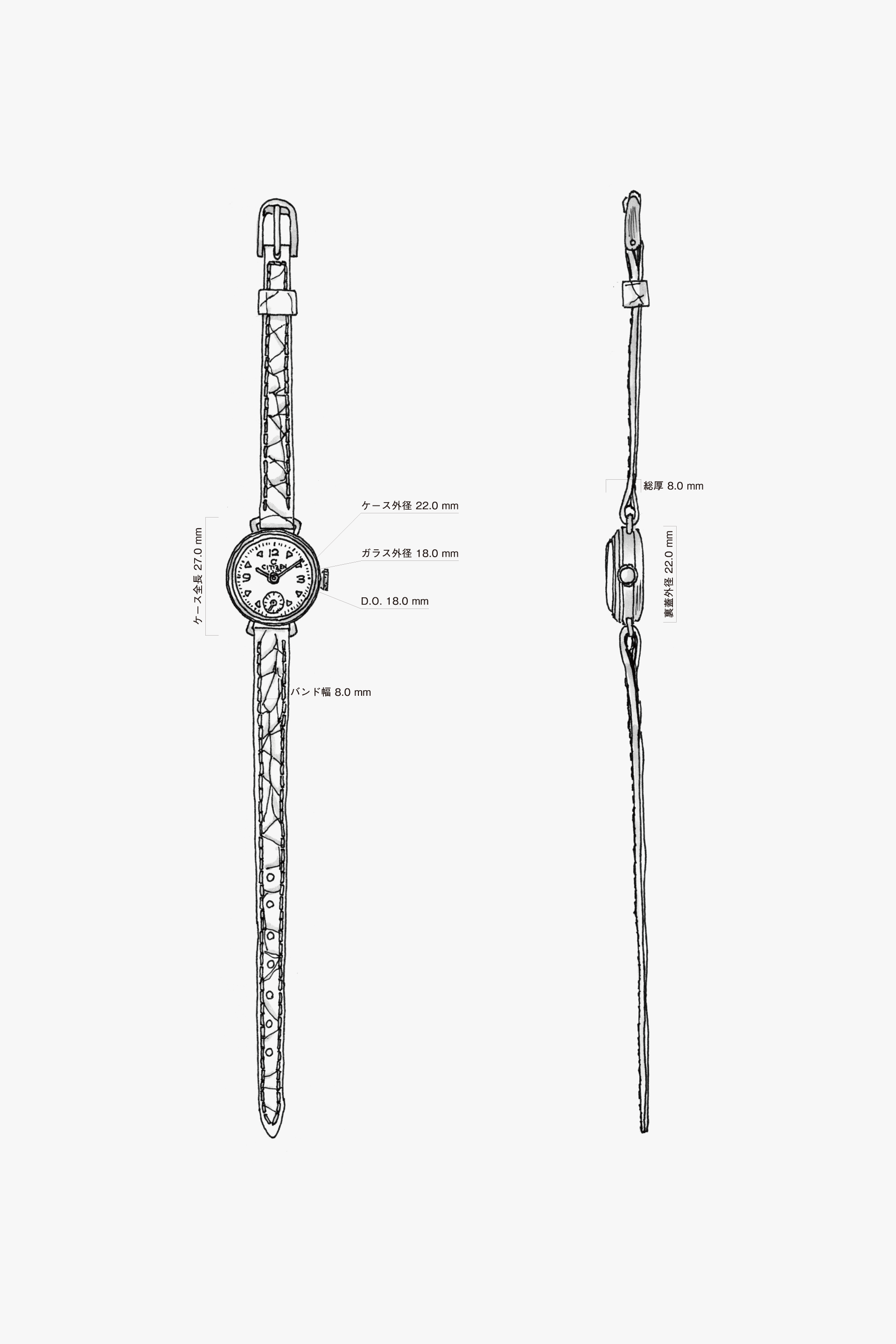
CITIZEN's first women's watch featured the mainstream design of the time. Its round and gentle form was widely accepted by working women. Even from the side, the watch has a plump, round, and gentle shape.
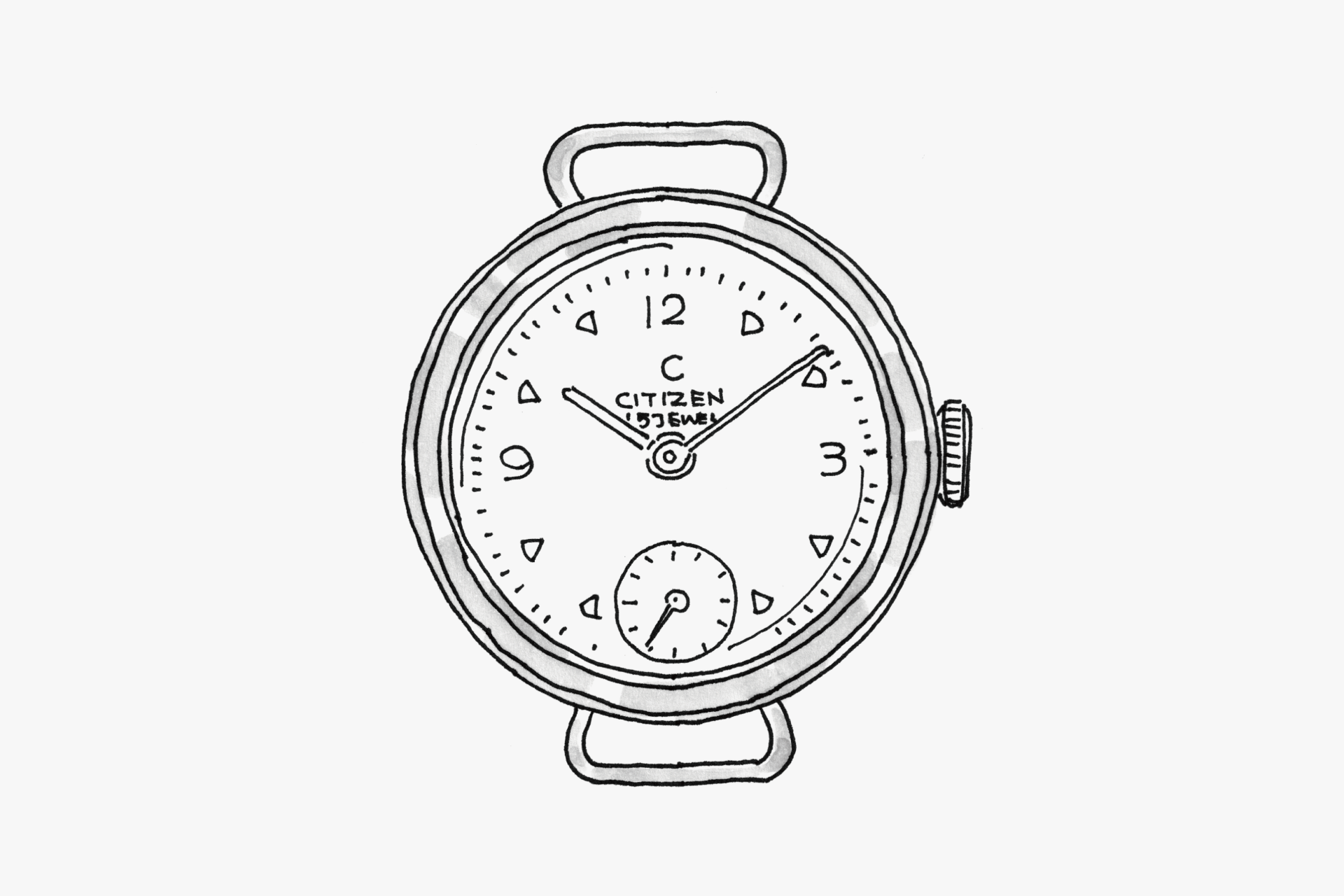
The end pieces are slender, but when the band is attached, they become charming lugs.
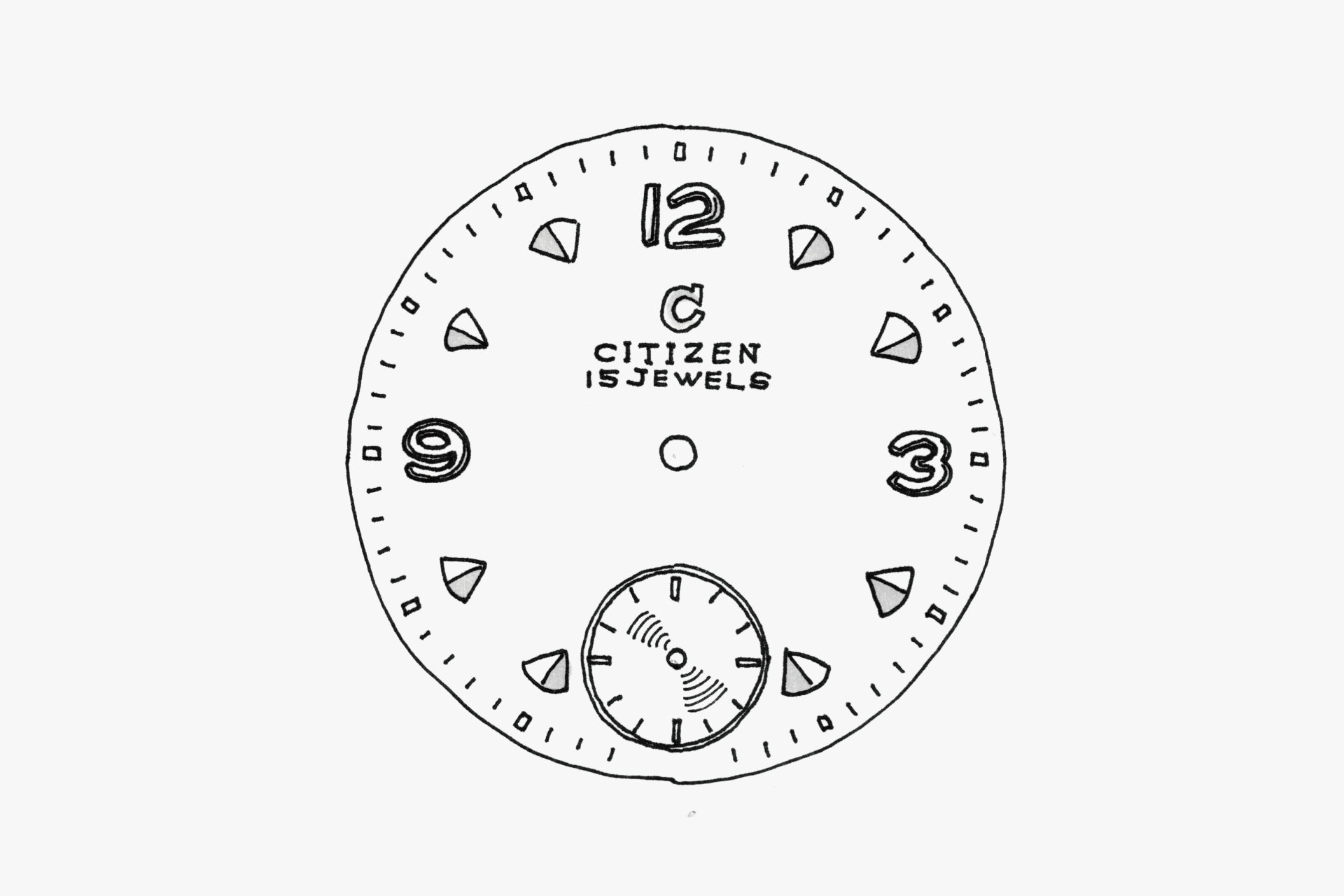
The layout at the 12 o'clock position features thoughtful adjustments to the size and width of the numerals, achieving a perfect balance with the small seconds subdial at 6 o'clock.

Although the crown is thin, its large diameter makes it easy to turn, and the knurled texture, composed of curves, provides a pleasant tactile feel.

The case body appears to be in two parts, but including the case back, it is smoothly integrated without any steps, giving it a plump, unified look. The box-shaped domed plastic crystal also contributes to the overall round and gentle finish.

The bent minute hand overlapping the minute track ensures excellent legibility. The flat base of the hand is also beautiful. The three-dimensional C mark and the indexes, which can look heart-shaped depending on the angle, are well balanced.
ENGINEER'S EYE
Realist
Cal. K is a compact movement that was conceived and developed to be installed, for the first time as CITIZEN, in a women’s watch, and it was mounted in this model in 1935, four years after the release of CITIZEN’s first watch movement, Cal. F. The watch movements that CITIZEN manufactured in the 1930s exhibit several realist tendencies.
One is the so-called “alias watch,” referring to the fact that a fair number were manufactured under brands specified by wholesale partners. CITIZEN movements with inscriptions other than CITIZEN were produced, and such pieces can still occasionally be found on the antique watch market today. The bridge shapes were altered to suit each brand, creating originality—evidence of remarkably meticulous workmanship.
Another is that the screw pitch was aligned with the Swiss standards that were widely adopted in the watch industry. It is said that the first pocket watch deliberately used German standards to encourage the use of manufacturer’s genuine parts, which in turn prompted feedback from repair workshops that they could not reuse generic screws; adopting the Swiss pitch addressed this issue. This movement is a precious one that survived the wartime years through steady, painstaking efforts.