At a time when most watches only had three hands, this model was the first domestically produced watch to incorporate day, date, and month calendar functions. The combination of a gold-plated case and a black crocodile leather strap instantly gives an impression of luxury, and the delicate craftsmanship on the gold dial and buckle confirms its high-end nature. The first thing that catches your eye are the windows for 'month' and 'day of the week.' Next, you notice the deep blue numbers from 1 to 31 arranged in an arc and the round-tipped hand pointing to them. It intuitively feels like a sun symbol, making it clear at a glance that this is the 'date display.' The sharp, bold sword-shaped hands have a strong presence, yet they harmonize with the base color of the dial, making it clear that the true stars are the 'day, date, and month.' Looking at the side, the push buttons have small indentations about the size of a ballpoint pen tip, making you want to press them with a pen. Pressing the push button at 2 o'clock rotates the 'day wheel' near 2 o'clock, pressing the one at 10 o'clock rotates the 'month wheel' near 10 o'clock, and pressing the remaining button at 4 o'clock rotates the 'date hand.' Everything is extremely easy to understand. Despite its new functions, this watch excels in allowing you to intuitively grasp its sense of luxury, display features, and even how to operate it.
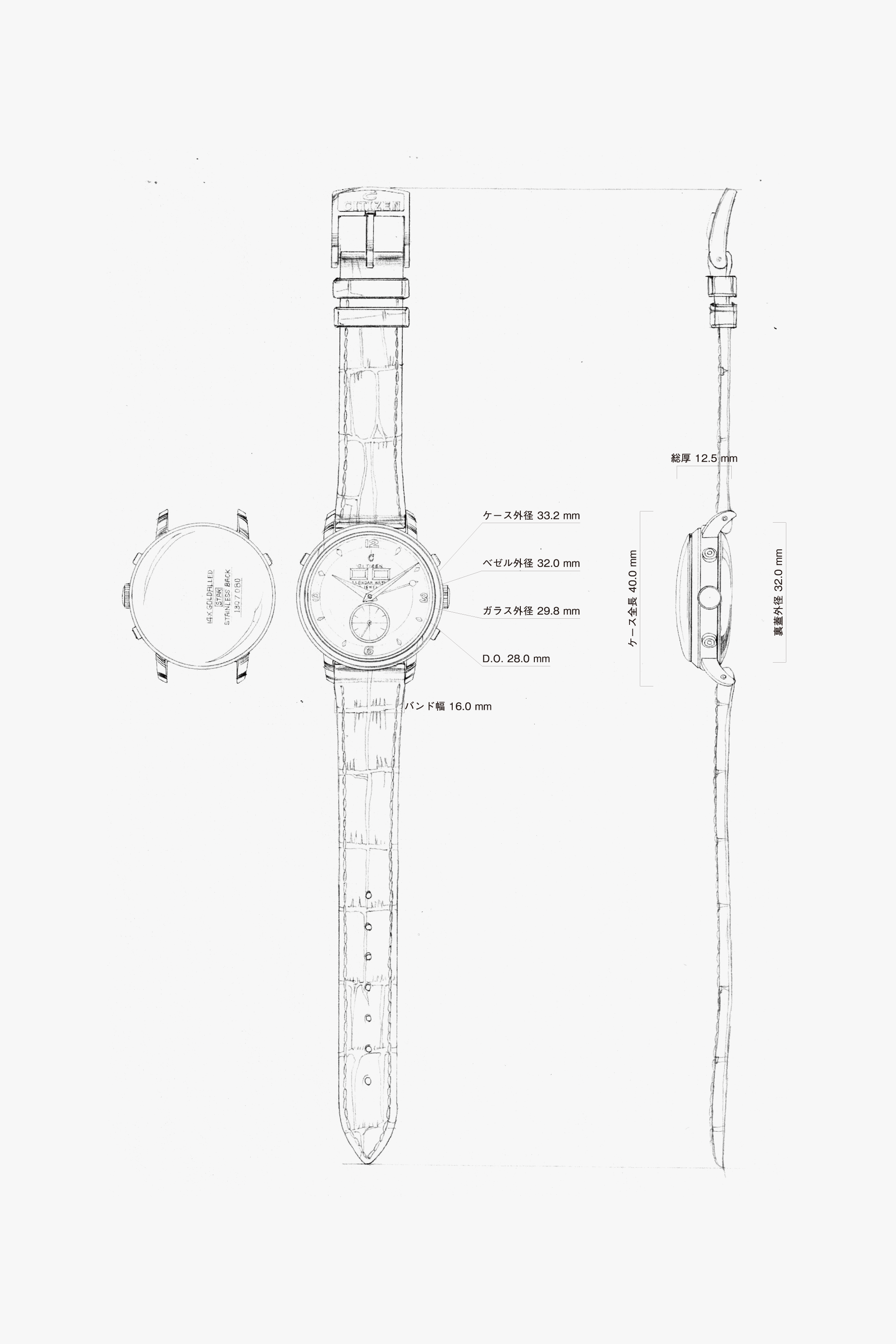
A classic balance between the case and leather strap. The dial is well-balanced and gives a sense of reassurance. The luxurious gold case and black crocodile leather strap.
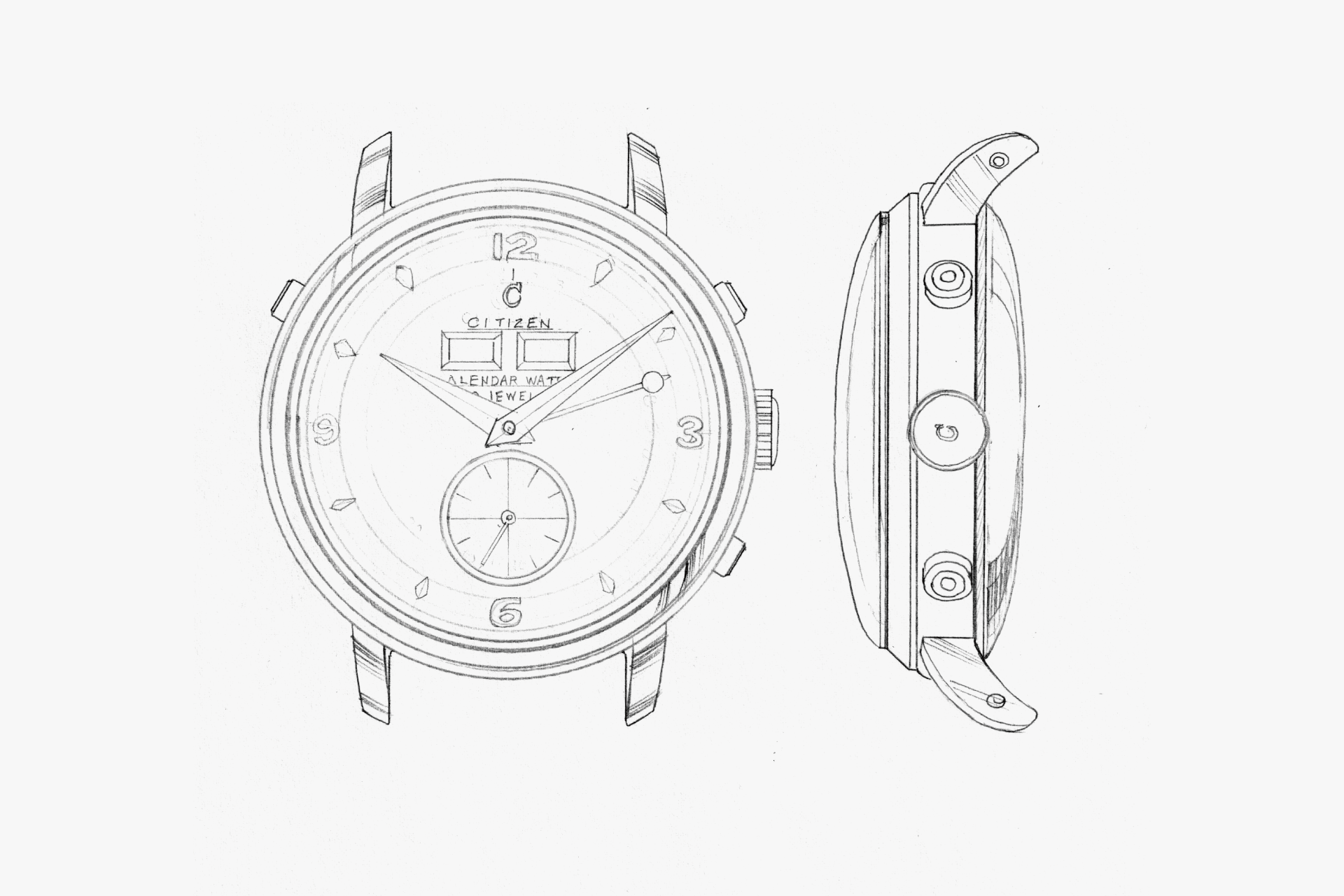
The case diameter and lug balance create a reassuring, classic proportion. The lugs drop below the case back, and the curvature of the top surface and bezel are beautifully finished. Coated with 18K gold plating, it must have sparkled brilliantly when first released.
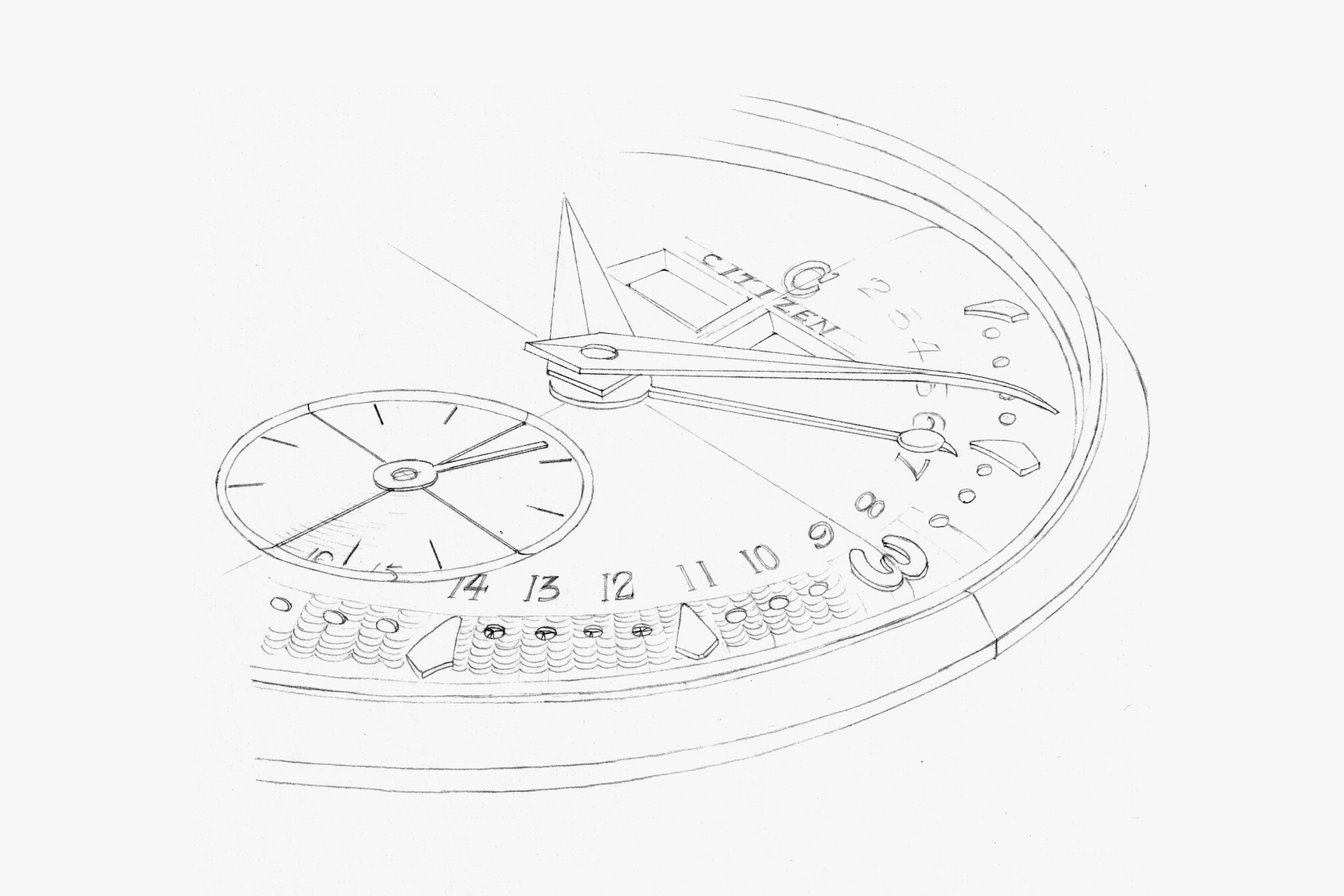
The upper surface of the dial features a delicate pattern, and the minute track is recessed as if each mark was drilled, with a sunray finish. The indexes follow the curvature of the dial, showing meticulous attention to detail.
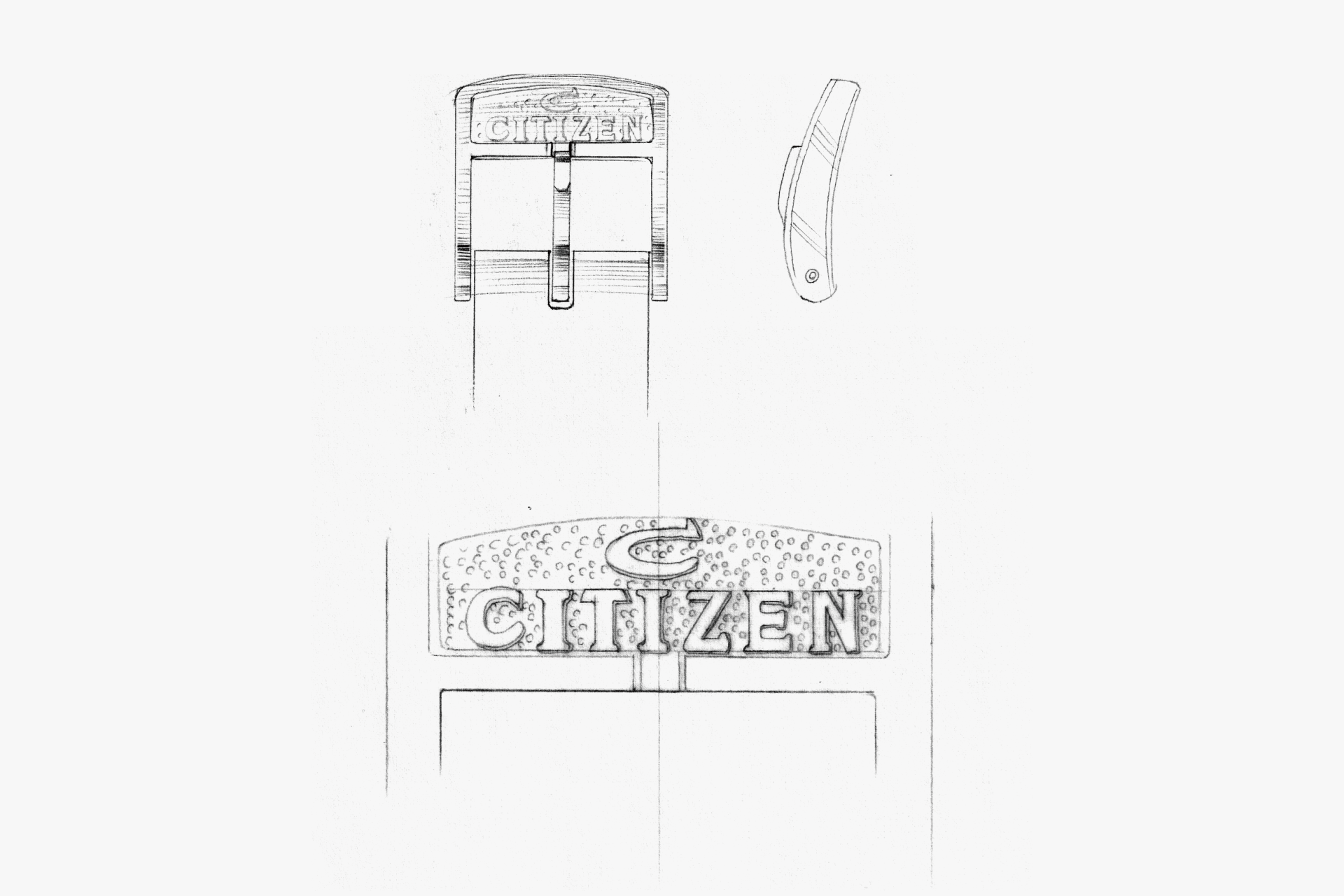
The embossed 'CITIZEN' logo and even the surrounding granules are embossed.
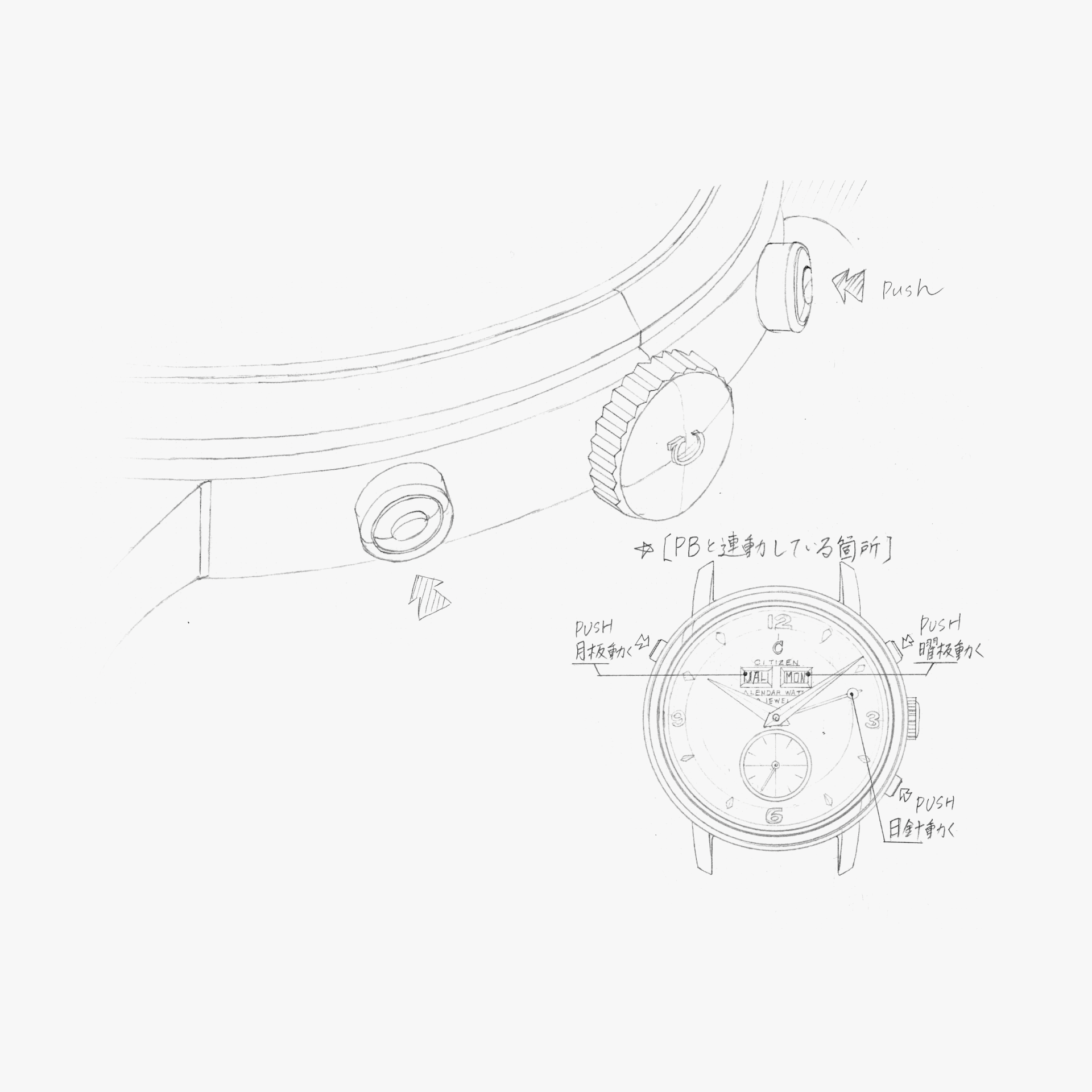
The push buttons have indentations that make you want to press them with a ballpoint pen. Pressing the push button at 2 o'clock rotates the 'day disc' near 2 o'clock, pressing the one at 10 o'clock rotates the 'month disc' near 10 o'clock, and pressing the remaining button at 4 o'clock rotates the 'date hand.' The operation is intuitively understandable.
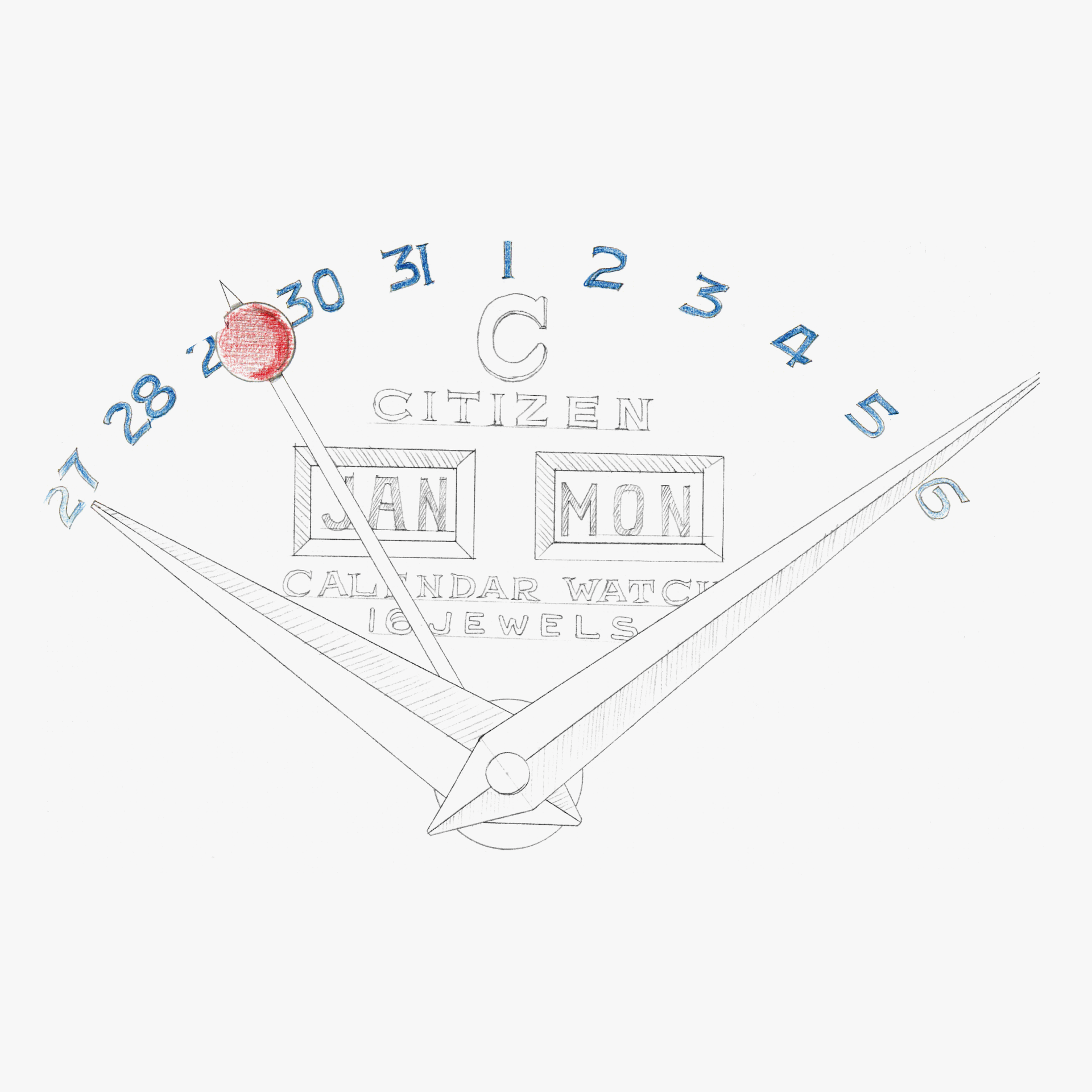
The first thing that catches your eye are the windows for 'month' and 'day of the week.' Next, you notice the deep blue numbers from 1 to 31 arranged in an arc and the round-tipped hand pointing to them. It intuitively feels like a sun symbol, making it clear at a glance that this is the 'date display.'
ENGINEER'S EYE
Craft Meets Industry
The movement installed here inherits the lineage of Cal. F, which had been manufactured since before the war, with a triple calendar mechanism added on the dial side.
What differs greatly from Cal. F is the bridge design: the previously curve-based aesthetic was completely revamped into a more linear form. After the war, modern design grounded in rationalism and functionalism became mainstream, eliminating the artisanal, craft-like elements once seen in various industrial products, and this movement’s styling can be seen as part of that trend.
At the same time, it appears to have been positioned as a high-end piece for its era, retaining much of the classical beauty of a traditional hand-wound movement: the balance wheel still carries old-style timing screws, and the edges of the jewel-set bridge holes are carefully polished, offering visual delight to the observer.
One could say that it embodies a calm harmony between the Swiss handcraftsmanship that had a strong prewar influence and the distinctly Japanese industrial design explored in the postwar period.