Developed in 1958 as Japan’s first "bell-ringing watch," this model continued to sell well for many years, spawning various variations, despite its price of 9,200 yen—almost equivalent to a new university graduate’s starting salary at the time.
The reason for its success, I believe, lies in how the additional alarm function is expressed as an indicator hand at the center of the dial, and in the distinctive crowns placed at the 2 and 4 o’clock positions for ease of use, beautifully integrating function and design.
Excellent design, in my view, is when functionality is so beautifully integrated that one can intuitively understand how to use it and its purpose just by looking at its form, without needing to consult the manual.
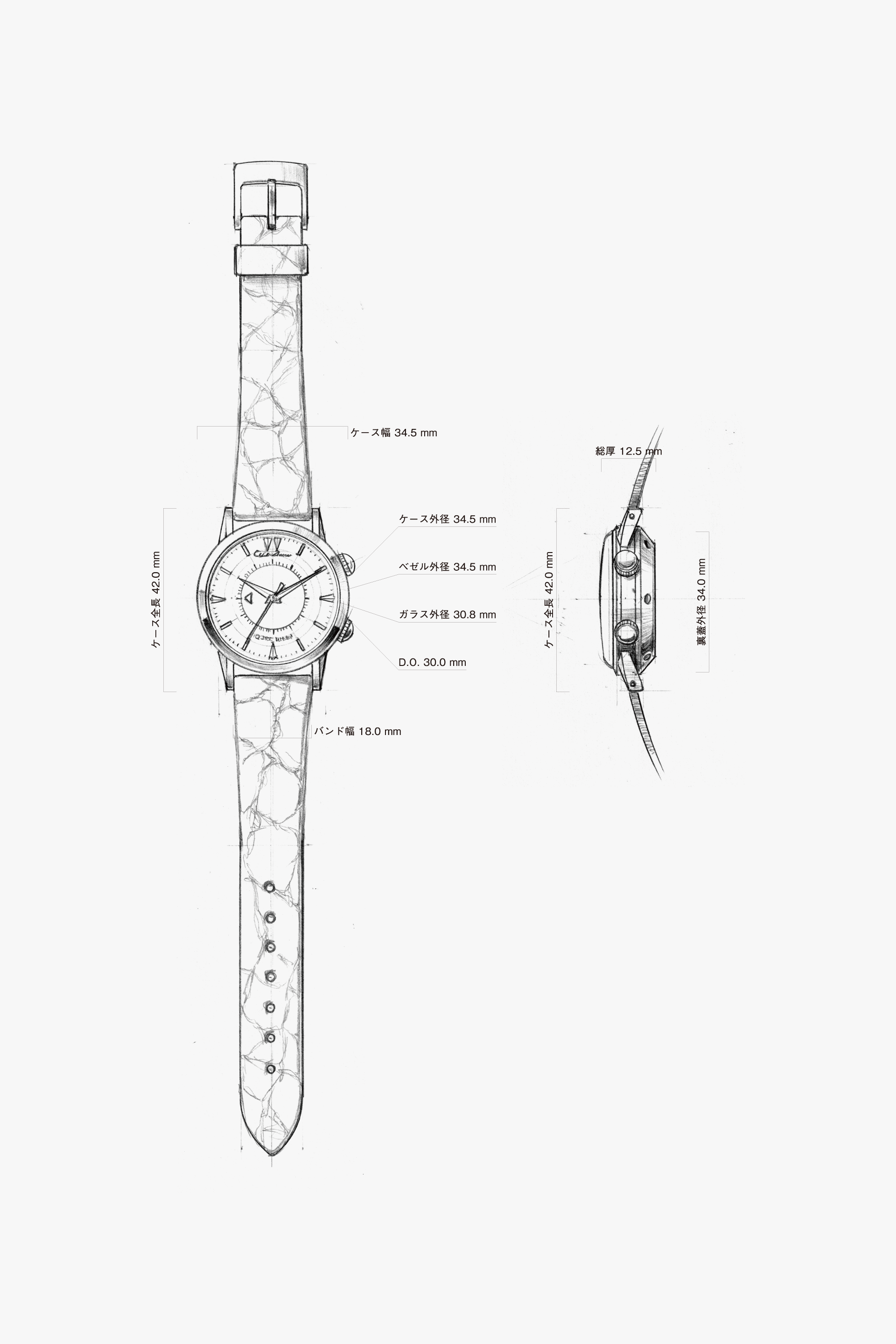
The case design features the thin bezel and simple shape typical of the era, but to visually express the alarm function—Japan’s first at the time—it achieves a unique look with its distinctive crown placement and the indicator disc hand at the center of the dial. The upper surface of the lugs is edged with two differently angled planes, making them appear slimmer than they actually are. The back edge of the lugs is chamfered for comfort against the skin.
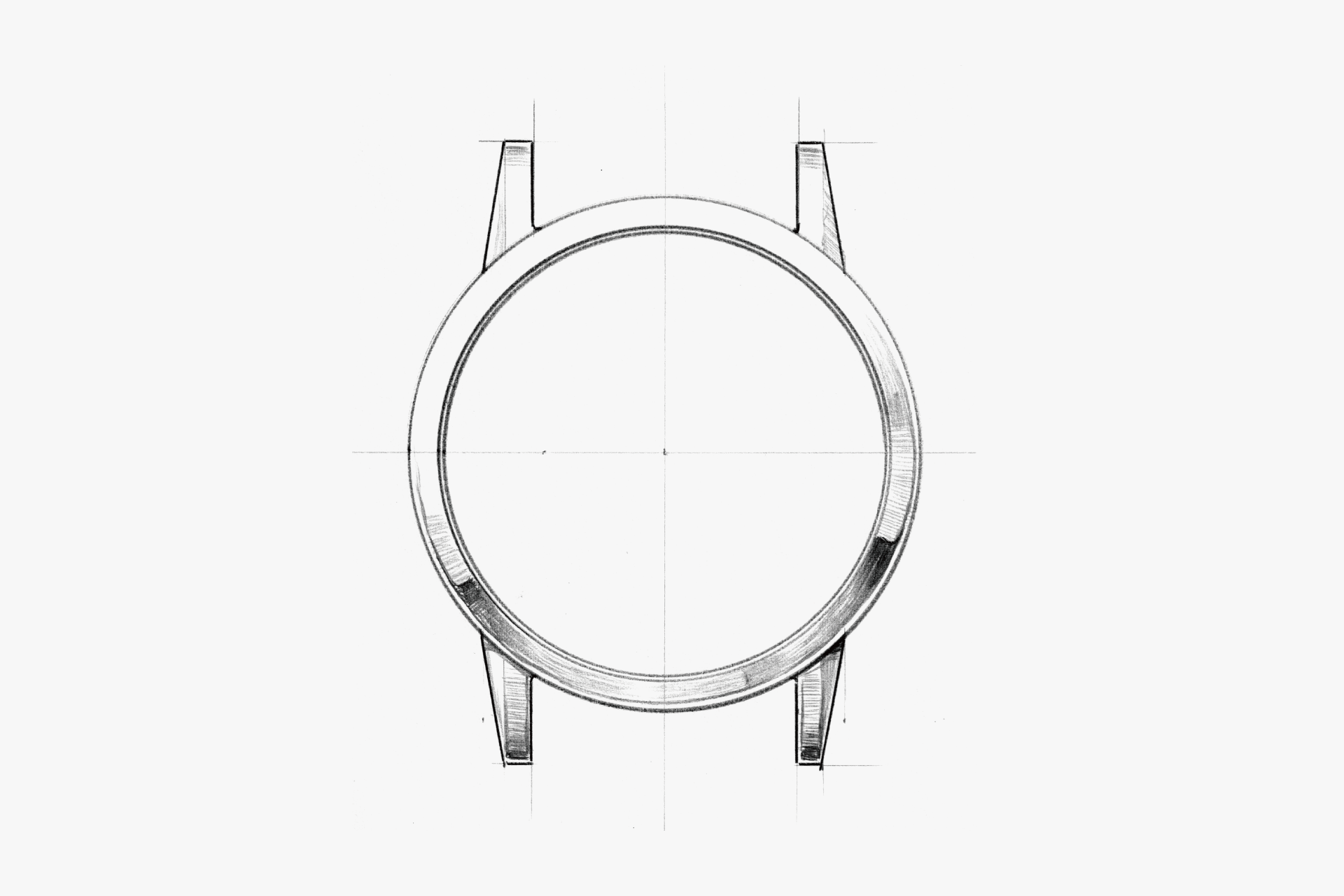
The case design is a simple shape with a thin bezel, which was the mainstream at the time.
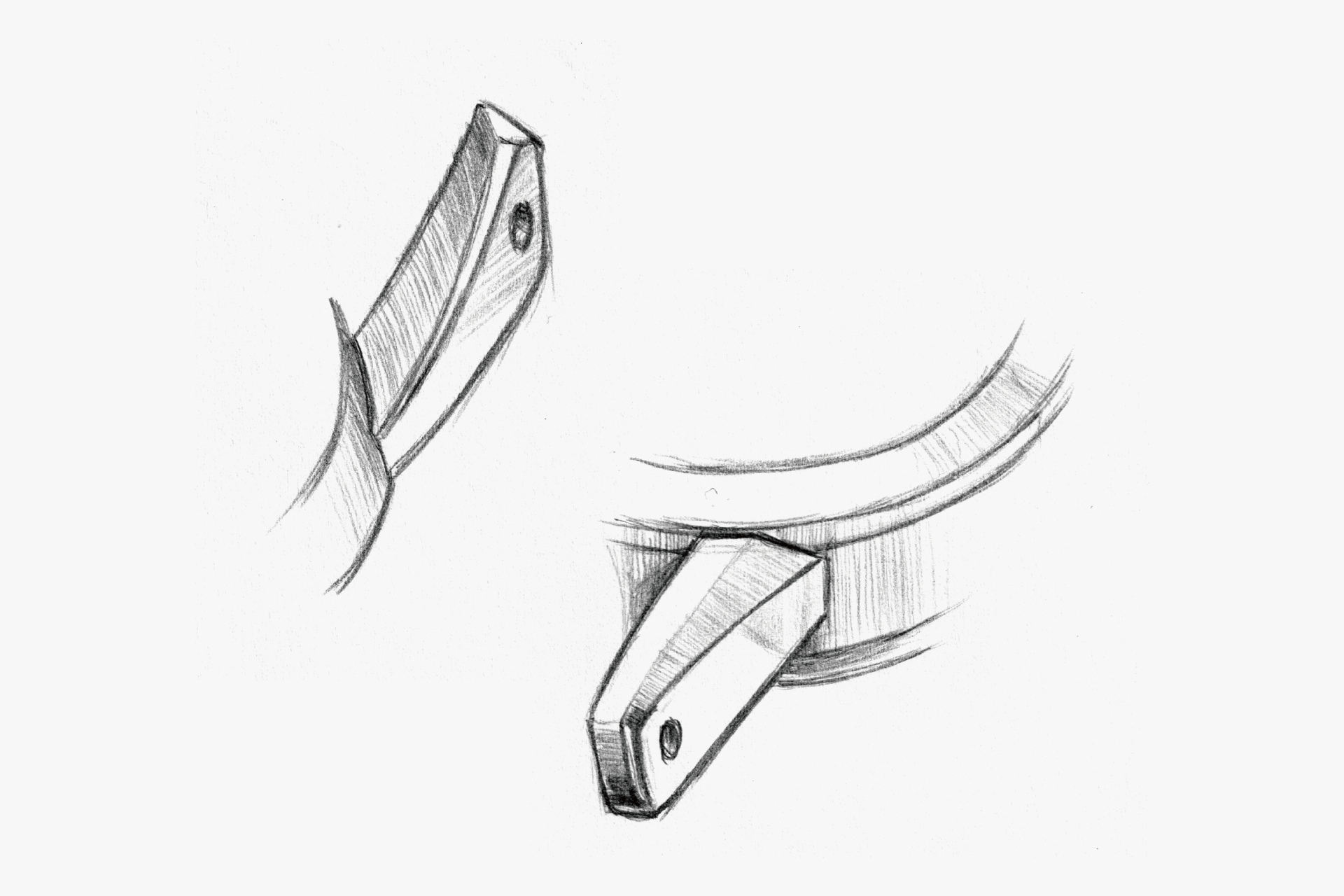
The back edge of the lugs is chamfered for comfort against the skin. The upper surface of the lugs is edged with two differently angled planes, making them appear slimmer than they actually are.
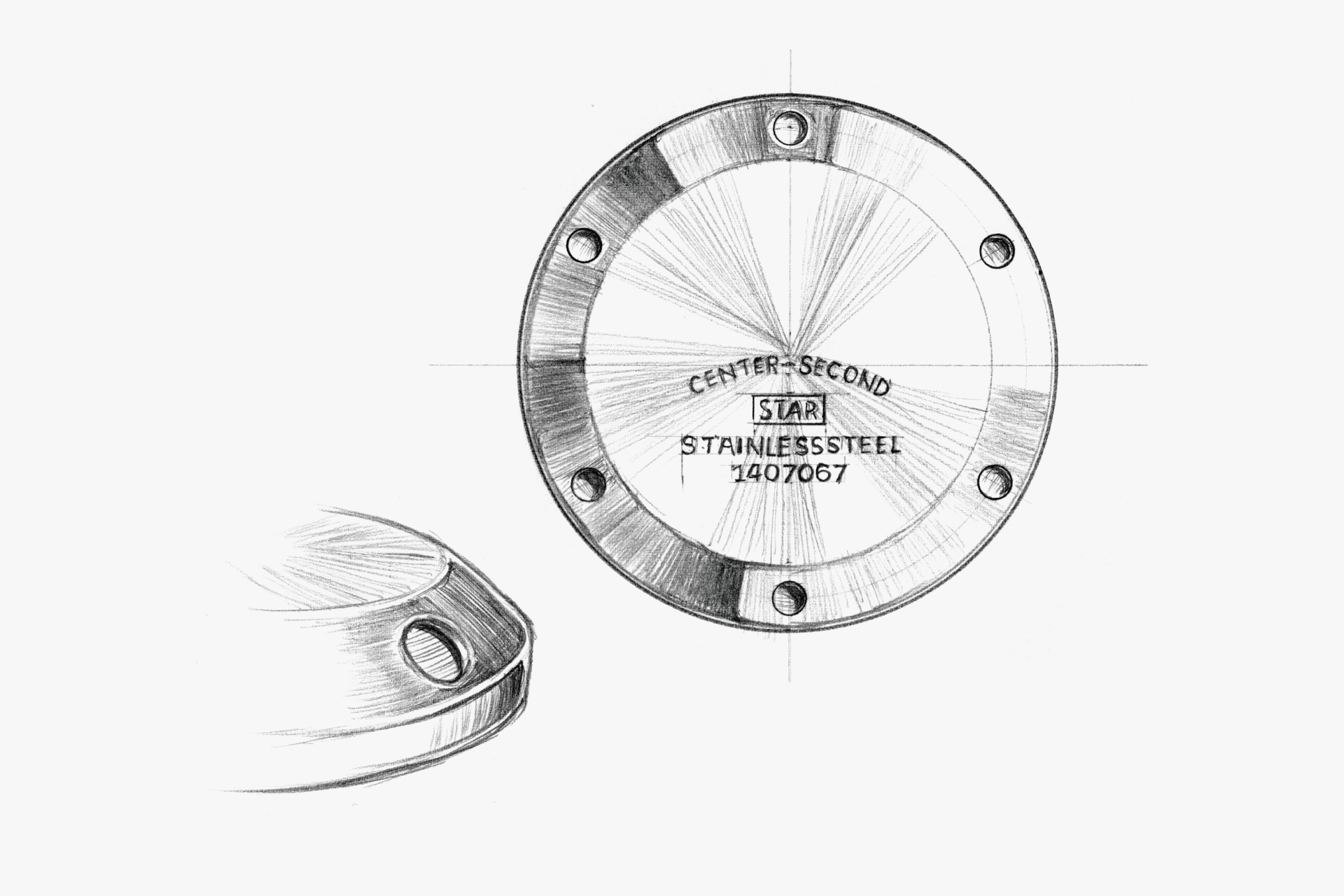
The early models used a "double case back" structure to resonate the alarm sound, with sound holes in the outer case back to let the sound from the inner resonating case back ring out clearly.
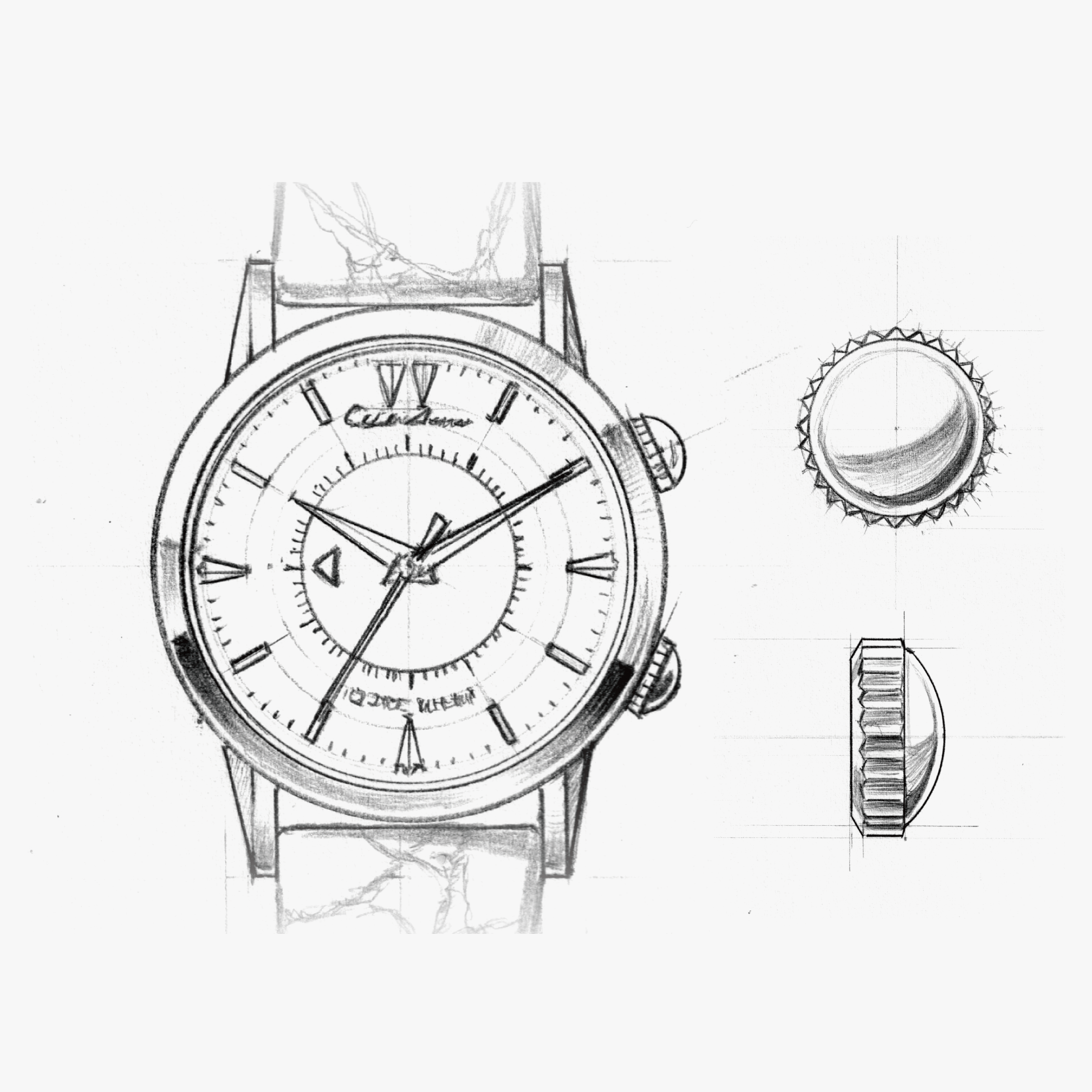
The case features two slightly oversized 5.5mm crowns—one at 2 o’clock for the alarm and one at 4 o’clock for time adjustment—improving operability and serving as the model’s most distinctive design feature.
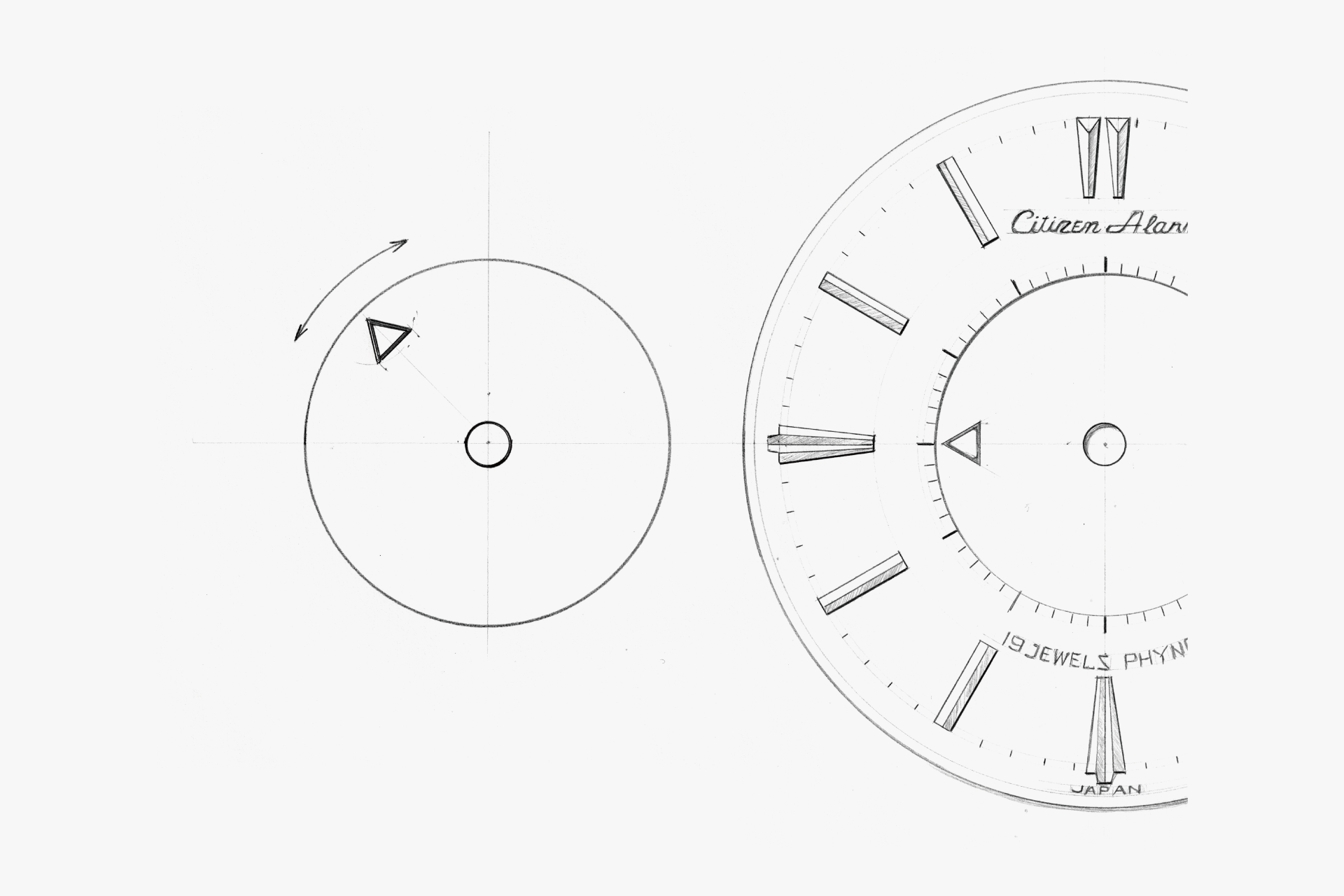
A circular alarm time indicator disc is placed at the center of the dial, and by rotating the entire disc, it greatly enhances usability and makes the alarm setting easy to understand at a glance.
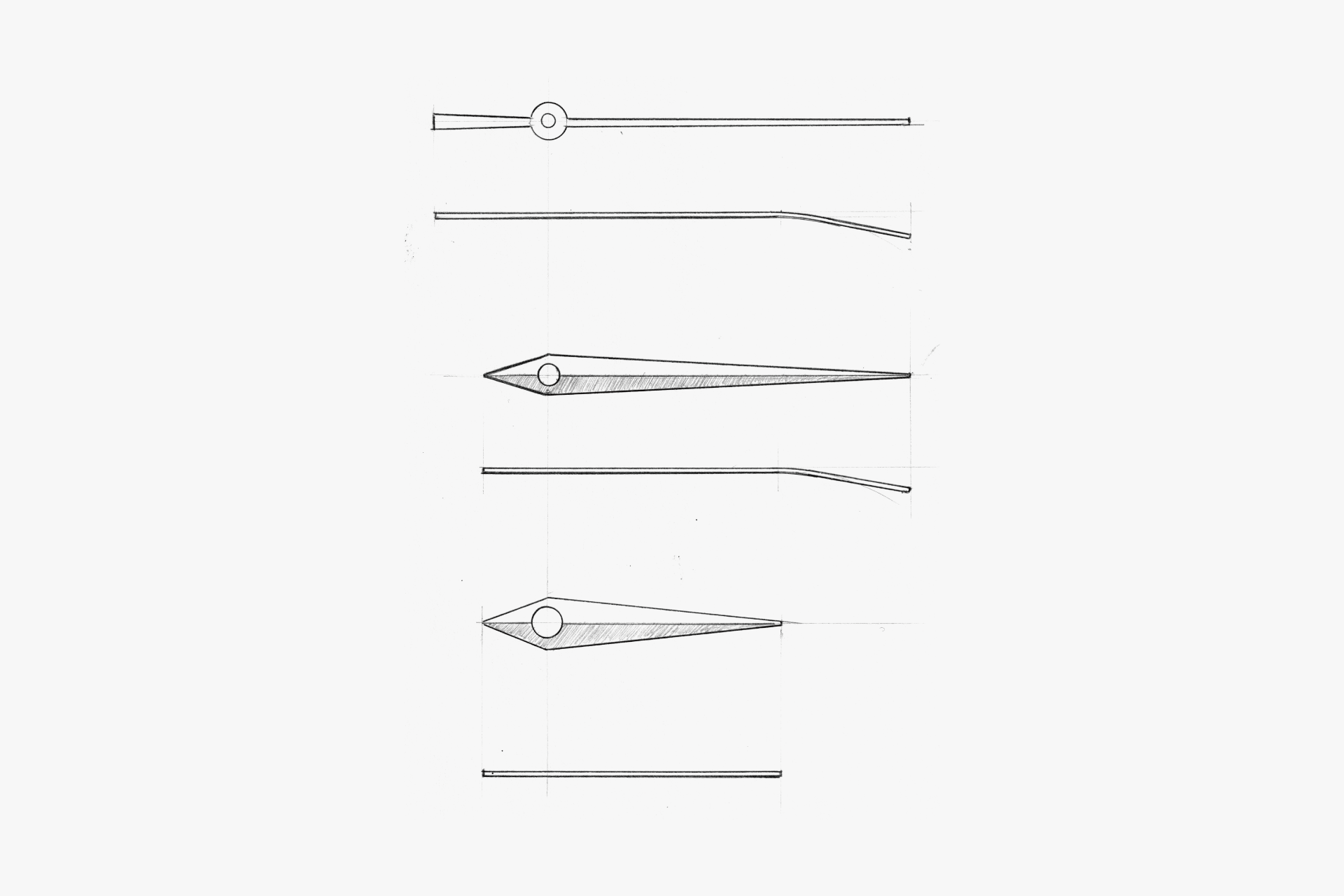
The second hand is straight, and the hour and minute hands are diamond-shaped—a very basic combination—but the long second and minute hands are curved at the tips to avoid interference with the box glass.
ENGINEER'S EYE
Legacy Feature
After the war, one of the factors behind the rapid growth of the Swiss watch industry was the strengthening of product appeal through additional features such as water resistance, calendar, chronograph, and alarm. Influenced by this trend, CITIZEN also released a wristwatch with an alarm function in 1958 as a special-feature model.
Driven by a hammer powered by a mainspring dedicated to the alarm mechanism—separate from the regular power mainspring—the hammer strikes the case back, notifying the time not only by sound but also by vibration, which made it highly practical. Because the number of parts is large, the structure is difficult from a productivity standpoint, yet the fact that mass production was achieved testifies to the skill of the assembly artisans of the time.
The product enjoyed a long run. In terms of design, it evolved from a disc display type to a four-hand structure, and the case advanced to Parawater. After that, it transitioned to versions with a date and to diver types, and finally, it continued to meet demand as a subdued pocket watch, remaining in the lineup until the early 1970s.